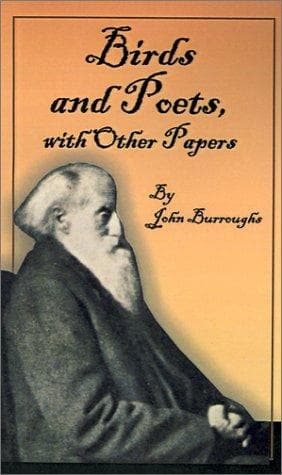
Birds and Poets : with Other PapersBurroughs, John
History
Birds and Poets : with Other Papers
Burroughs, John
American essays -- 19th century; Birds; Natural history -- Outdoor books; Nature
Many times during the winter the sugar-berry tree was visited by a flock
of cedar-birds that also wintered in the vicinity. At such times it
was amusing to witness the pretty wrath of the bluebirds, scolding and
threatening the intruders, and begrudging them every berry they ate. The
bluebird cannot utter a harsh or unpleasing note. Indeed, he seems
to have but one language, one speech, for both love and war, and the
expression of his indignation is nearly as musical as his song. The male
frequently made hostile demonstrations toward the cedar-birds, but did
not openly attack them, and, with his mate, appeared to experience great
relief when the poachers had gone.
I had other company in my solitude also, among the rest a distinguished
arrival from the far north, the pine grosbeak, a bird rarely seen in
these parts, except now and then a single specimen. But in the winter of
1875, heralding the extreme cold weather, and no doubt in consequence of
it, there was a large incursion of them into this State and New England.
They attracted the notice of the country people everywhere. I first saw
them early in December about the head of the Delaware. I was walking
along a cleared ridge with my gun, just at sundown, when I beheld two
strange birds sitting in a small maple. On bringing one of them down, I
found it was a bird I had never before seen; in color and shape like the
purple finch, but quite as large again in size. From its heavy beak,
I at once recognized it as belonging to the family of grosbeaks. A few
days later I saw large numbers of them in the woods, on the ground,
and in the trees. And still later, and on till February, they were very
numerous on the Hudson, coming all about my house,--more familiar even
than the little snowbird, hopping beneath the windows, and looking up
at me apparently with as much curiosity as I looked down upon them.
They fed on the buds of the sugar maples and upon frozen apples in the
orchard. They were mostly young birds and females, colored very
much like the common sparrow, with now and then visible the dull
carmine-colored head and neck of an old male.
Other northern visitors that tarried with me the same winter were the
tree or Canada sparrow and the redpoll, the former a bird larger than
the social sparrow or hair-bird, but otherwise much resembling it, and
distinguishable by a dark spot in the middle of its breast; the latter a
bird the size and shape of the common goldfinch, with the same manner
of flight and nearly the same note or cry, but darker than the winter
plumage of the goldfinch, and with a red crown and a tinge of red on the
breast. Little bands of these two species lurked about the barnyard all
winter, picking up the hayseed, the sparrow sometimes venturing in on
the haymow when the supply outside was short. I felt grateful to them
for their company. They gave a sort of ornithological air to every
errand I had to the barn.
Public-domain text, read in full here on John Shaqi.
Reviews
Reviews
No reviews yet
Be the first to share your thoughts on this work.
Join the Discussion
Join the discussion
Sign in to leave a comment or review.
Sign InorCreate an account