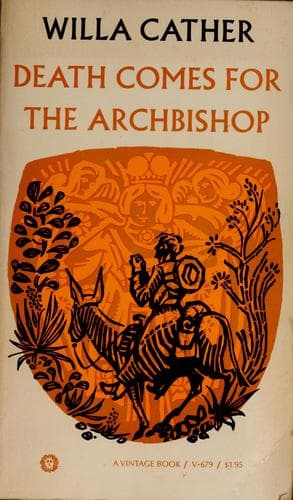
Christian fiction; Clergy -- Fiction; Historical fiction; New Mexico -- Fiction
A MONTH after the Bishop's visit to Albuquerque and Ácoma, the genial
Father Gallegos was formally suspended, and Father Vaillant himself took
charge of the parish. At first there was bitter feeling; the rich
_rancheros_ and the merry ladies of Albuquerque were very hostile to the
French priest. He began his reforms at once. Everything was changed. The
holy-days, which had been occasions of revelry under Padre Gallegos,
were now days of austere devotion. The fickle Mexican population soon
found as much diversion in being devout as they had once found in being
scandalous. Father Vaillant wrote to his sister Philomène, in France,
that the temper of his parish was like that of a boys' school; under one
master the lads try to excel one another in mischief and disobedience,
under another they vie with each other in acts of loyalty. The Novena
preceding Christmas, which had long been celebrated by dances and
hilarious merry-making, was this year a great revival of religious zeal.
Though Father Vaillant had all the duties of a parish priest at
Albuquerque, he was still Vicar General, and in February the Bishop
dispatched him on urgent business to Las Vegas. He did not return on the
day that he was expected, and when several days passed with no word from
him, Father Latour began to feel some anxiety.
One morning at day-break a very sick Indian boy rode into the Bishop's
courtyard on Father Joseph's white mule, Contento, bringing bad news.
The Padre, he said, had stopped at his village in the Pecos mountains
where black measles had broken out, to give the sacrament to the dying,
and had fallen ill of the sickness. The boy himself had been well when
he started for Santa Fé, but had become sick on the way.
The Bishop had the messenger put into the wood-house, an isolated
building at the end of the garden, where the Sisters of Loretto could
tend him. He instructed the Mother Superior to pack a bag with such
medicines and comforts for the sick as he could carry, and told
Fructosa, his cook, to put up for him the provisions he usually took on
horseback journeys. When his man brought a pack-mule and his own mule,
Angelica, to the door, Father Latour, already in his rough
riding-breeches and buckskin jacket, looked at the handsome beast and
shook his head.
"No, leave her with Contento. The new army mule is heavier, and will do
for this journey."
Public-domain text, read in full here on John Shaqi.
Reviews
Reviews
No reviews yet
Be the first to share your thoughts on this work.
Join the Discussion
Join the discussion
Sign in to leave a comment or review.
Sign InorCreate an account