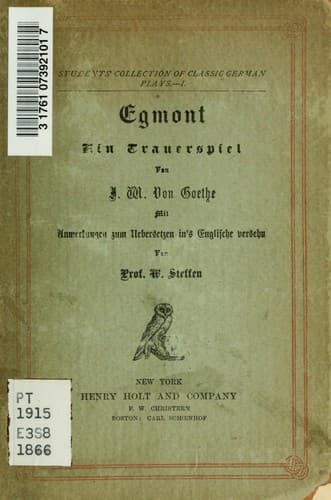
Egmont, Lamoraal, Graaf van, 1522-1568 -- Drama; Tragedies (Drama)
Alva. You would not have us believe, however, that such is the case here
at present?
Egmont. Let the king proclaim a general pardon; he will thus
tranquillize the public mind; and it will be seen how speedily loyalty
and affection will return, when confidence is restored.
Alva. How! And suffer those who have insulted the majesty of the
king, who have violated the sanctuaries of our religion, to go abroad
unchallenged! living witnesses that enormous crimes may be perpetrated
with impunity!
Egmont. And ought not a crime of frenzy, of intoxication, to be excused,
rather than horribly chastised? Especially when there is the sure hope,
nay, more, where there is positive certainty that the evil will never
again recur? Would not sovereigns thus be more secure? Are not those
monarchs most extolled by the world and by posterity, who can pardon,
pity, despise an offence against their dignity? Are they not on that
account likened to God himself, who is far too exalted to be assailed by
every idle blasphemy?
Alva. And therefore, should the king contend for the honour of God and
of religion, we for the authority of the king. What the supreme power
disdains to avert, it is our duty to avenge. Were I to counsel, no
guilty person should live to rejoice in his impunity.
Egmont. Think you that you will be able to reach them all? Do we not
daily hear that fear is driving them to and fro, and forcing them out
of the land? The more wealthy will escape to other countries with their
property, their children, and their friends; while the poor will carry
their industrious hands to our neighbours.
Alva. They will, if they cannot be prevented. It is on this account that
the king desires counsel and aid from every prince, zealous co-operation
from every stadtholder; not merely a description of the present posture
of affairs, or conjectures as to what might take place were events
suffered to hold on their course without interruption. To contemplate a
mighty evil, to flatter oneself with hope, to trust to time, to strike
a blow, like the clown in a play, so as to make a noise and appear to do
something, when in fact one would fain do nothing; is not such conduct
calculated to awaken a suspicion that those who act thus contemplate
with satisfaction a rebellion, which they would not indeed excite, but
which they are by no means unwilling to encourage?
Public-domain text, read in full here on John Shaqi.
Reviews
Reviews
No reviews yet
Be the first to share your thoughts on this work.
Join the Discussion
Join the discussion
Sign in to leave a comment or review.
Sign InorCreate an account