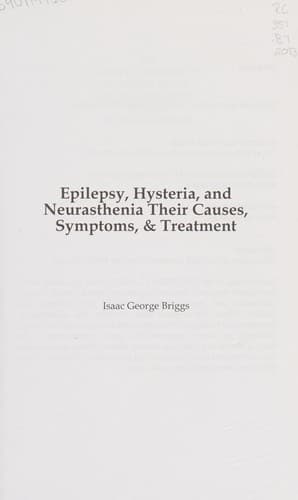
Epilepsy, Hysteria, and Neurasthenia: Their Causes, Symptoms, & TreatmentBriggs, Isaac George
Science
Epilepsy, Hysteria, and Neurasthenia: Their Causes, Symptoms, & Treatment
Briggs, Isaac George
Epilepsy; Hysteria; Nervous system -- Diseases; Neurasthenia
Author and actor try by suggestion to make us think, laugh, or weep at
their will, books are sold by suggestive titles, and many clothes are worn
only to suggest wealth or respectability.
The best salesman is he who by artful suggestion sells us what we do not
want; the best buyer he who by equally astute suggestion makes the seller
part at a price which makes him regret the bargain the moment it is closed.
Suggestion treatment is of great use in curing nervous states and bad
habits, and all neuropaths should practice self- or auto-suggestion. In
severe cases a specialist must give the treatment.
The patient is taken by the neurologist to a cosy, restfully-furnished,
half-lighted room, and placed in a huge easy chair facing a cheery fire. He
sinks into the depths of the chair, relaxes every muscle, allows his
thoughts to wander pleasantly, and soon his brain is at rest, and his mind,
undisturbed by the fears which usually harass it, is ready to receive
suggestions.
The doctor talks quietly, soothingly, but with the conviction born of
knowledge to the patient about his trouble, assuring him that he _can_
control his cravings; that he _can_ put away the doubts or fears that have
grown upon him. The true reason of his illness is pointed out, any little
organic factors given due weight, and the idea that it is hereditary or due
to Fate dispelled. Faults of character, reasoning and living are
unsparingly exposed and appropriate remedies suggested, and he is shown how
unmanly his self-torturing reproaches are, and how futile is remorse unless
transmuted into reform.
The doctor's earnestness inspires confidence, and the patient unburdens his
secret troubles, discusses means of remedying them, and turns from pain to
promise, from remorse to resolve, from introspection to action, from
dreading to doing.
Struck by the way the psycho-analyst reads his soul and lays bare petty
meannesses, impressed by the patient thoroughness with which the doctor
attends to each little symptom, confident that organic troubles--if there
be any--will receive appropriate treatment, ready to carry out
instructions, and disposed to believe the new treatment is of real value:
under all these circumstances, the physician's suggestions carry very great
weight with the patient.
The resolutions passed by the victim in this calm state sink deep into
subconsciousness, and when next temptation, impulse or fear assails him,
his own resolutions and the doctor's suggestions are so vividly recalled
that he tries to control his thoughts, and, in due time he "wins out".
Anyone may induce the calm state, and repeat suitable suggestions. The
patient should go to a quiet room, and, reclining on a comfortable couch
before a cheery fire, close the eyes, relax the muscles, breathe deeply,
and avoid all sense of strain.
Public-domain text, read in full here on John Shaqi.
Reviews
Reviews
No reviews yet
Be the first to share your thoughts on this work.
Join the Discussion
Join the discussion
Sign in to leave a comment or review.
Sign InorCreate an account