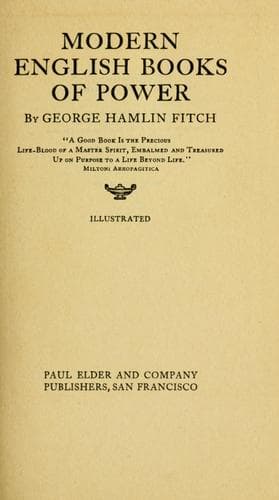
English literature -- 19th century -- History and criticism
Oh, may I join the choir invisible
Of those immortal dead who live again
In minds made better by their presence: live
In pulses stirred to generosity,
In deeds of daring rectitude, in scorn
For miserable aims that end in self.
* * * * *
This is life to come
Which martyred men have made more glorious
For us who strive to follow. May I reach
That purest heaven, be to other souls
The cup of strength in some great agony,
Enkindle generous ardor, feed pure love.
Beget the smiles that have no cruelty--
Be the sweet presence of a good diffused,
And in diffusion ever more intense.
So shall I join the choir invisible,
Whose music is the gladness of the world.
This was the creed of George Eliot, which she preached in her books
and which she followed in her life. This was the only hope of
immortality that she cherished--to "live again" in minds that she
stimulated.
RUSKIN THE APOSTLE OF ART
HIS WORK AS ART CRITIC AND SOCIAL REFORMER--BEST BOOKS ARE
"MODERN PAINTERS," "THE SEVEN LAMPS" AND "THE STONES OF
VENICE."
John Ruskin deserves a place among the great English writers of the
last century, not only because of his superb style and the amount of
his work, but because he was the first to encourage the study of art
and nature among the people. So enormous have been the strides made in
the last twenty years in popular knowledge of art and architecture,
and so great the growth of interest in the beauties of nature that it
is difficult to appreciate that a little over a half century ago, when
Ruskin first came into prominence as a writer, the English public was
densely ignorant of art, and was equally ignorant of the world of
pleasure to be derived from beautiful scenery.
It was Ruskin's great service to the world that he opened the eyes of
the public to the glories of the art of all countries, and that he
also revealed the wonders of architecture. Many critics have laid bare
his infirmities as a critic, but a man of colder blood and less
emotional nature would never have reached the large public to which
Ruskin appealed. Like a great orator he was swayed by the passion of
convincing his audience, and the very extravagance of his language and
the ardor of his nature served to make a profound impression upon
readers who are not usually affected by such appeals as his.
Public-domain text, read in full here on John Shaqi.
Reviews
Reviews
No reviews yet
Be the first to share your thoughts on this work.
Join the Discussion
Join the discussion
Sign in to leave a comment or review.
Sign InorCreate an account