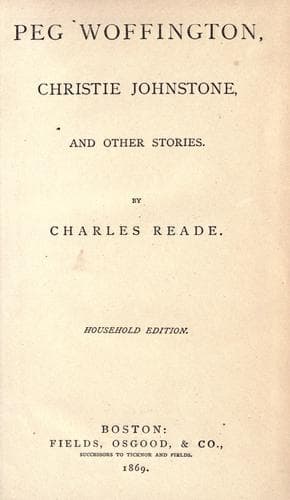
Actresses -- Fiction; Biographical fiction; Great Britain -- History -- 18th century -- Fiction; Woffington, Margaret, -1760 -- Fiction
weeping together? Yes! ten minutes ago they were rayless, joyless,
hopeless. Now the sun was in their hearts, and sorrow and sighing were
fled, as fogs disperse before the god of day. It was magical; could
a mortal play upon the soul of man, woman and child like this? Happy
Woffington! and suppose this was more than half acting, but such acting
as Triplet never dreamed of; and to tell the honest, simple truth, I
myself should not have suspected it; but children are sharper than one
would think, and Alcibiades Triplet told, in after years, that, when
they were all dancing except the lady, he caught sight of her face--and
it was quite, quite grave, and even sad; but, as often as she saw him
look at her, she smiled at him so gayly--he couldn't believe it was the
same face.
If it was art, glory be to such art so worthily applied! and honor to
such creatures as this, that come like sunshine into poor men's houses,
and tune drooping hearts to daylight and hope!
The wonder of these worthy people soon changed to gratitude. Mrs.
Woffington stopped their mouths at once.
“No, no!” cried she; “if you really love me, no scenes; I hate them.
Tell these brats to kiss me, and let me go. I must sit for my picture
after dinner; it is a long way to Bloomsbury Square.”
The children needed no bidding; they clustered round her, and poured out
their innocent hearts as children only do.
“I shall pray for you after father and mother,” said one.
“I shall pray for you after daily bread,” said Lucy, “because we were
_tho_ hungry till you came!”
“My poor children!” cried Woffington, and hard to grown-up actors,
as she called us, but sensitive to children, she fairly melted as she
embraced them.
It was at this precise juncture that the door was unceremoniously
opened, and the two gentlemen burst upon the scene!
My reader now guesses whom Sir Charles Pomander surprised more than he
did Mrs. Woffington. He could not for the life of him comprehend what
she was doing, and what was her ulterior object. The _nil admirari_ of
the fine gentleman deserted him, and he gazed open-mouthed, like the
veriest chaw-bacon.
The actress, unable to extricate herself in a moment from the children,
stood there like Charity, in New College Chapel, while the mother kissed
her hand, and the father quietly dropped tears, like some leaden water
god in the middle of a fountain.
Vane turned hot and cold by turns, with joy and shame. Pomander's genius
came to the aid of their embarrassment.
“Follow my lead,” whispered he. “What! Mrs. Woffington here!” cried he;
then he advanced business-like to Triplet. “We are aware, sir, of your
various talents, and are come to make a demand on them. I, sir, am the
unfortunate possessor of frescoes; time has impaired their indelicacy,
no man can restore it as you can.”
“Augh! sir! sir!” said the gratified goose.
“My Cupid's bows are walking-sticks, and my Venus's noses are snubbed.
You must set all that straight on your own terms, Mr. Triplet.”
Public-domain text, read in full here on John Shaqi.
Reviews
Reviews
No reviews yet
Be the first to share your thoughts on this work.
Join the Discussion
Join the discussion
Sign in to leave a comment or review.
Sign InorCreate an account