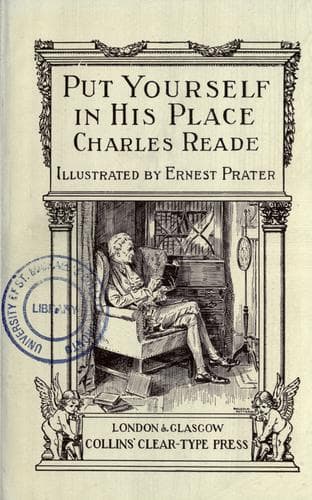
English fiction -- 19th century; Labor unions -- Fiction
She had been fretting for hours at his delay; but she never let him
know it. The whole place was full of preparations for his comfort, and
certain delicacies he liked were laid out on a little side board,
and the tea-things set, including the silver teapot, used now on high
occasions only.
She had a thousand questions to ask, and he to answer. And, while he
ate, the poor woman leaned back, and enjoyed seeing him eat; and,
while he talked, her fine eyes beamed with maternal joy. She reveled
deliciously in his health, his beauty, and his safe return to her;
and thought, with gentle complacency, they would soon return to London
together.
In the morning, she got out a large, light box, and said. “Harry, dear,
I suppose I may as well begin to pack up. You know I take longer than
you do.”
Henry blushed. “Pack up?” said he, hesitatingly. “We are not going
away.”
“Not going away, love? Why you agreed to leave, on account of those
dreadful Unions.”
“Oh, I was ill, and nervous, and out of spirits; but the air of
Cairnhope has made a man of me. I shall stay here, and make our
fortune.”
“But the air of Cairnhope has not made you friends with the unions.”
She seemed to reflect a moment, then asked him at what time he had left
Cairnhope.
“Eleven o'clock.”
“Ah! And whom did you visit before you came to me?”
“You question me like a child, mother.”
“Forgive me, dear. I will answer my own question. You called on some one
who gave you bad advice.”
“Oh, did I?”
“On some woman.”
“Say, a lady”
“What does it matter to me?” cried Mrs. Little, wildly. “They are all my
enemies. And this one is yours. It is a woman, who is not your mother,
for she thinks more of herself than of you.”
CHAPTER VII.
Henry had now to choose between his mother's advice, and Miss Carden's
commands; and this made him rather sullen and irritable. He was glad
to get out of his mother's house, and went direct to the works. Bayne
welcomed him warmly, and, after some friendly congratulations and
inquiries, pulled out two files of journals, and told him he had
promised to introduce him to the editor of the Liberal. He then begged
Henry to wait in the office, and read the files--he would not be gone
many minutes.
The Constitutional gave a dry narrative of the outrage, and mourned the
frequency of such incidents.
The Liberal gave a dramatic narrative, and said the miscreant must have
lowered himself by a rope from the parapet, and passed the powder inside
without entering. “He periled his life to perpetrate this crime; and he
also risked penal servitude for ten years. That he was not deterred by
the double risk, proves the influence of some powerful motive; and that
motive must have been either a personal feud of a very virulent kind, or
else trade fanaticism. From this alternative there is no escape.”
Public-domain text, read in full here on John Shaqi.
Reviews
Reviews
No reviews yet
Be the first to share your thoughts on this work.
Join the Discussion
Join the discussion
Sign in to leave a comment or review.
Sign InorCreate an account