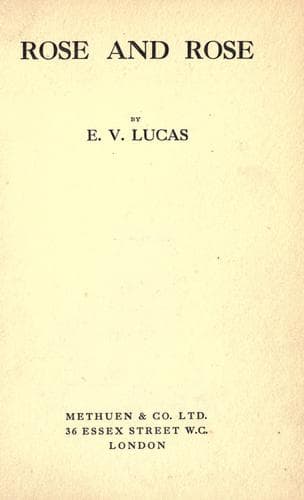
England -- Social life and customs -- Fiction; Guardian and ward -- Fiction; Physicians -- Fiction; Single men -- Fiction
Every doctor is asked for advice in matrimonial differences, or at any
rate is made a confidant. One can have too many of such confidences; but
I defy any general practitioner, however brusque and curmudgeonly, to
escape them altogether. Most of us have seen so many couples that we can
tell at a glance what is wrong—which brand of incompatibility is in use.
For there are so many. Temper is supposed to have a monopoly in this
matter, but that is far from the case. There can be incompatibility in
other matters, apparently trifling, and trifling in fact unless lifelong
fetters are involved. Incompatibility of temperature, for example, where
the lute is rifted because the wife wants all the fresh air that windows
and doors can let in, and the husband rejoices only in a vacuum. A
doctor sees so many of such antipodal house-mates—I don’t say that all
are married people—that he comes to divide the world into those who are
healthily disposed and those whose only idea of a window is a thing to
shut.
It is a truism that wedded felicity is a very fragile craft, liable to be
swamped by any unforeseen wave, and it requires the most delicate
seamanship, both at the helm and at the sail. I have seen marriages
ruined by so pleasant a spice to ordinary intercourse as irony. Irony in
a husband, and a tendency in a wife to depreciate her husband or make him
a butt in public—these have much misery to answer for. Absence of mind
in a husband can be fatal: an inability to look ahead, to reserve seats,
to order a cab, to remember theatre tickets. And then, again, over-much
presence of mind can be fatal too: an insistence on punctuality and too
much officiousness about the house.
I could not tell which was the cause of the want of sympathy between Rose
and Eustace, but I felt something was wrong almost directly I entered
their door. Outwardly they were pleasant enough together; but there was
no warmth in the air, no electricity. Rose Holt was not Rose
Allinson—very far from it. But she was sweeter than ever to me; almost I
could bring myself to be glad that all was not well, for it made her so
tender, so thoughtfully attentive, to her old friend. It was the Rose of
the middle teens over again, but with a richness and maturity added.
Eustace was courteous, a solicitous host, and I felt spoilt between them.
But there was something wrong. When their eyes met across the table no
light kindled.
It was a comfortable, distinguished house. The furniture was good. The
right books were scattered about, some in French; the right periodicals.
Photographs after the Old Masters. In Rose’s little boudoir were water
colours.
After dinner Eustace left us. He had some difficult papers to go through
and master, and we were left alone.
Rose established me by the fire and sat beside me on a cushion.
“Is all well with my child?” I asked.
She did not reply.
Public-domain text, read in full here on John Shaqi.
Reviews
Reviews
No reviews yet
Be the first to share your thoughts on this work.
Join the Discussion
Join the discussion
Sign in to leave a comment or review.
Sign InorCreate an account