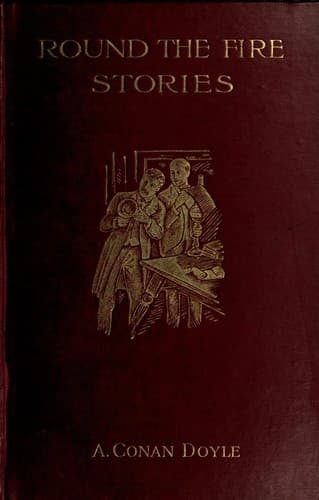
English fiction; Horror tales, English; Short stories, English
“It was from some friend’s gossip of the sick room that she heard of
this invention—this phonograph—and with the quick insight of a loving
woman she saw how she might use it for her ends. She sent me to London
to procure the best which money could buy. With her dying breath she
gasped into it the words which have held me straight ever since. Lonely
and broken, what else have I in all the world to uphold me? But it is
enough. Please God, I shall face her without shame when He is pleased to
reunite us! That is my secret, Mr. Colmore, and whilst I live I leave it
in your keeping.”
THE BLACK DOCTOR
Bishop’s Crossing is a small village lying ten miles in a south-westerly
direction from Liverpool. Here in the early seventies there settled a
doctor named Aloysius Lana. Nothing was known locally either of his
antecedents or of the reasons which had prompted him to come to this
Lancashire hamlet. Two facts only were certain about him: the one that
he had gained his medical qualification with some distinction at
Glasgow; the other that he came undoubtedly of a tropical race, and was
so dark that he might almost have had a strain of the Indian in his
composition. His predominant features were, however, European, and he
possessed a stately courtesy and carriage which suggested a Spanish
extraction. A swarthy skin, raven-black hair, and dark, sparkling eyes
under a pair of heavily-tufted brows made a strange contrast to the
flaxen or chestnut rustics of England, and the new-comer was soon known
as “The Black Doctor of Bishop’s Crossing.” At first it was a term of
ridicule and reproach; as the years went on it became a title of honour
which was familiar to the whole country-side, and extended far beyond
the narrow confines of the village.
For the new-comer proved himself to be a capable surgeon and an
accomplished physician. The practice of that district had been in the
hands of Edward Rowe, the son of Sir William Rowe, the Liverpool
consultant, but he had not inherited the talents of his father, and Dr.
Lana, with his advantages of presence and of manner, soon beat him out
of the field. Dr. Lana’s social success was as rapid as his
professional. A remarkable surgical cure in the case of the Hon. James
Lowry, the second son of Lord Belton, was the means of introducing him
to county society, where he became a favourite through the charm of his
conversation and the elegance of his manners. An absence of antecedents
and of relatives is sometimes an aid rather than an impediment to social
advancement, and the distinguished individuality of the handsome doctor
was its own recommendation.
Public-domain text, read in full here on John Shaqi.
Reviews
Reviews
No reviews yet
Be the first to share your thoughts on this work.
Join the Discussion
Join the discussion
Sign in to leave a comment or review.
Sign InorCreate an account