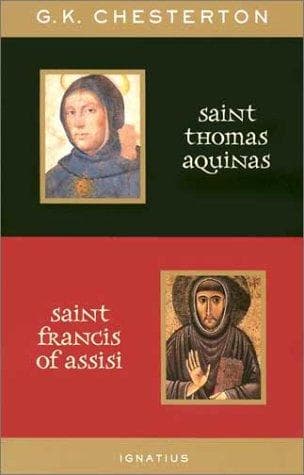
St. Francis of AssisiChesterton, G. K. (Gilbert Keith)
Religion
St. Francis of Assisi
Chesterton, G. K. (Gilbert Keith)
Francis, of Assisi, Saint, 1182-1226
all these things that God had given as something more precious and
unique than the blazonry that princes and peers had only given to
themselves. Indeed out of the depths of that surrender it rose higher
than the highest titles of the feudal age; than the laurel of Cæsar or
the Iron Crown of Lombardy. It is an example of extremes that meet, that
the Little Poor Man, who had stripped himself of everything and named
himself as nothing, took the same title that has been the wild vaunt of
the vanity of the gorgeous Asiatic autocrat, and called himself the
Brother of the Sun and Moon.
This quality, of something outstanding and even startling in things as
St. Francis saw them, is here important as illustrating a character in
his own life. As he saw all things dramatically, so he himself was
always dramatic. We have to assume throughout, needless to say, that he
was a poet and can only be understood as a poet. But he had one poetic
privilege denied to most poets. In that respect indeed he might be
called the one happy poet among all the unhappy poets of the world. He
was a poet whose whole life was a poem. He was not so much a minstrel
merely singing his own songs as a dramatist capable of acting the whole
of his own play. The things he said were more imaginative than the
things he wrote. The things he did were more imaginative than the things
he said. His whole course through life was a series of scenes in which
he had a sort of perpetual luck in bringing things to a beautiful
crisis. To talk about the art of living has come to sound rather
artificial than artistic. But St. Francis did in a definite sense make
the very act of living an art, though it was an unpremeditated art. Many
of his acts will seem grotesque and puzzling to a rationalistic taste.
But they were always acts and not explanations; and they always meant
what he meant them to mean. The amazing vividness with which he stamped
himself on the memory and imagination of mankind is very largely due to
the fact that he was seen again and again under such dramatic
conditions. From the moment when he rent his robes and flung them at his
father's feet to the moment when he stretched himself in death on the
bare earth in the pattern of the cross, his life was made up of these
unconscious attitudes and unhesitating gestures. It would be easy to
fill page after page with examples; but I will here pursue the method
found convenient everywhere in this short sketch, and take one typical
example, dwelling on it with a little more detail than would be possible
in a catalogue, in the hope of making the meaning more clear. The
example taken here occurred in the last days of his life, but it refers
back in a rather curious fashion to the first; and rounds off the
remarkable unity of that romance of religion.
Public-domain text, read in full here on John Shaqi.
Reviews
Reviews
No reviews yet
Be the first to share your thoughts on this work.
Join the Discussion
Join the discussion
Sign in to leave a comment or review.
Sign InorCreate an account