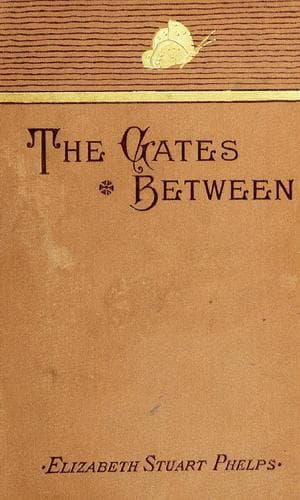
Christian fiction; Future life -- Fiction; Spiritualism -- Fiction
"Tell me," I said, turning toward him who had brought me thither, "how
shall I make compensation for my entertainment? What is the custom of
the country? I--what we used to call property--you will understand
that I necessarily left behind me. I am accustomed to the use of it.
I hardly know what to do without it. I am accustomed to--some
abundance. I wish to remunerate the people of this house."
"What _did_ you bring with you?" asked my new acquaintance, with a
half-sorrowful look, as if he would have helped me out of an unpleasant
position if he could.
"Nothing," I replied, after some thought, "nothing but my misery. That
does not seem to be a marketable commodity in this happy place. I
could spare some, if it were."
"What had you?" pursued my questioner, without noticing my ill-timed
satire. "What were your possessions in the life yonder?"
"Health. Love. Happiness. Home. Prosperity. Work. Fame. Wealth.
Ambition." I numbered these things slowly and bitterly. "None of them
did I bring with me. I have lost them all upon the way. They do not
serve me in this differing civilization."
"Was there by chance nothing more?"
"Nothing more. Unless you count a little incidental usefulness."
"And that?" he queried eagerly.
I therefore explained to him that I had been a very busy doctor; that I
used to think I took pleasure in relieving the misery of the sick, but
that it seemed a mixed matter now, as I looked back upon it,--so much
love of fame, love of power, love of love itself,--and that I did not
put forth my life's work as of importance in his scale of value.
"That would not lessen its value," replied my friend. "I myself was a
healer of the sick. Your case appeals to me. I was known as"--
He whispered a name which gave me a start of pleasure. It was a name
famous in its day, and that a day long before my own; a name immortal
in medical history. Few men in the world had done as much as this one
to lessen the sum of human suffering. It excited me greatly to meet
him.
"But you," I cried, "you were not like the rest of us or the most of
us. _You_ believed in these--invisible things. You were a man of what
is called faith. I have often thought of that. I never laid down a
biography of you without wondering that a man of your intelligence
should retain that superstitious element of character. I ought to beg
your pardon for the adjective. I speak as I have been in the habit of
speaking."
"Do you wonder now?" asked the great surgeon, smiling benignly. I
shook my head. I wondered at nothing now.
But I felt myself incapable of discussing a set of subjects upon which,
for the first time in my life, I now knew myself to be really
uninformed.
I took the pains to explain to my new friend that in matters of what he
would call spiritual import I was, for aught I knew to the contrary,
the most ignorant person in the community. I added that I supposed he
would expect me to feel humiliated by this.
Public-domain text, read in full here on John Shaqi.
Reviews
Reviews
No reviews yet
Be the first to share your thoughts on this work.
Join the Discussion
Join the discussion
Sign in to leave a comment or review.
Sign InorCreate an account