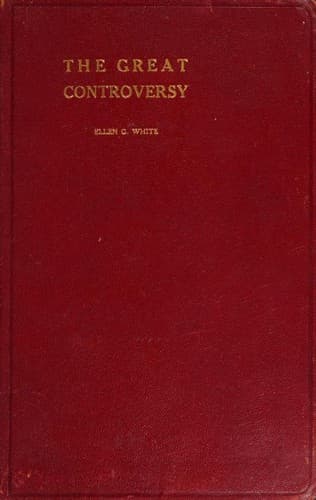
The Great Controversy Between Christ and Satan — John Shaqi
The Great Controversy Between Christ and SatanWhite, Ellen Gould Harmon
ReligionComparative
The Great Controversy Between Christ and Satan
White, Ellen Gould Harmon
Good and evil; Seventh-Day Adventists -- Doctrines; Spiritual direction
Wycliffe began to write and publish tracts against the friars, not,
however, seeking so much to enter into dispute with them as to call the
minds of the people to the teachings of the Bible and its Author. He
declared that the power of pardon or of excommunication is possessed by
the pope in no greater degree than by common priests, and that no man can
be truly excommunicated unless he has first brought upon himself the
condemnation of God. In no more effectual way could he have undertaken the
overthrow of that mammoth fabric of spiritual and temporal dominion which
the pope had erected, and in which the souls and bodies of millions were
held captive.
Again Wycliffe was called to defend the rights of the English crown
against the encroachments of Rome; and being appointed a royal ambassador,
he spent two years in the Netherlands, in conference with the
commissioners of the pope. Here he was brought into communication with
ecclesiastics from France, Italy, and Spain, and he had an opportunity to
look behind the scenes, and gain a knowledge of many things which would
have remained hidden from him in England. He learned much that was to give
point to his after-labors. In these representatives from the papal court
he read the true character and aims of the hierarchy. He returned to
England to repeat his former teachings more openly and with greater zeal,
declaring that covetousness, pride, and deception were the gods of Rome.
In one of his tracts he said, speaking of the pope and his collectors:
“They draw out of our land poor men’s livelihood, and many thousand marks,
by the year, of the king’s money, for sacraments and spiritual things,
that is cursed heresy of simony, and maketh all Christendom assent and
maintain this heresy. And certes though our realm had a huge hill of gold,
and never other man took thereof but only this proud worldly priest’s
collector, by process of time this hill must be spended; for he taketh
ever money out of our land, and sendeth naught again but God’s curse for
his simony.”(114)
Soon after his return to England, Wycliffe received from the king the
appointment to the rectory of Lutterworth. This was an assurance that the
monarch at least had not been displeased by his plain speaking. Wycliffe’s
influence was felt in shaping the action of the court, as well as in
moulding the belief of the nation.
Public-domain text, read in full here on John Shaqi.
Reviews
Reviews
No reviews yet
Be the first to share your thoughts on this work.
Join the Discussion
Join the discussion
Sign in to leave a comment or review.
Sign InorCreate an account