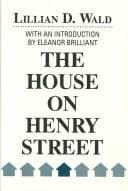
Henry Street Settlement (New York, N.Y.); Poor -- New York (State) -- New York
Up to a certain period the child’s helplessness demands that every
opportunity for development be given him, but that is not the whole of
society’s responsibility. The time comes when the child’s own interests
and those of the community demand the wisest, least selfish, and most
statesmanlike action. Society must state in definite terms its right
to be protected from the hopelessly defective and the moral pervert,
wherever found. This constitutes the real problem of the abnormal. At the
adolescent period those unfit for parenthood should be guarded—girls and
boys—and society should be vested with authority and power to accomplish
segregation, the conditions of which should attract and not repel.
Because so much needs to be said upon it, if anything is said at all, I
am loath to touch upon the one great obstacle to the effective use of
all the intelligence and the resources available for the well-being of
these children, the most baffling impediment to their and the community’s
protection, namely, the supreme authority of parenthood, be it never so
inefficient, avaricious, or even immoral.
* * * * *
The breaking up of the family because of poverty, through the death or
disappearance of the wage-earner, was, until comparatively recent years,
generally accepted as inevitable.
In the first winter of our residence on the East Side we took care of
Mr. S⸺, who was in an advanced stage of phthisis; and we daily admired
the wonderful ability of his wife, who kept the home dignified while she
sewed on wrappers, nursed her husband, and allowed nothing to interfere
with the children’s daily attendance at school. When her husband died
it seemed the most natural thing in the world to help her to realize
her own wishes and to approve her good judgment in desiring to keep
the family together. The orphan asylum would doubtless have taken the
children from her, leaving her childless as well as widowed, and with no
counterbalancing advantage for the children to lighten her double woe.
A large-minded lover of children, who gave his money to orphans as well
as to orphanages, readily agreed to give the mother a monthly allowance
until the eldest son could legally go to work. It was our first “widow’s
pension.”
Our hopes in this particular case have been more than realized. The
eldest boy, it is true, has not achieved any notable place in the
community; but his sisters are teachers and most desirable elements in
the public school system of the city,—living testimony to the worth of
the mother’s character.
In no instance where we have prevented the disintegration of the family
because of poverty have we had reason to regret our decision. Of course,
the ability of the mother to maintain a standard in the home and control
the children is a necessary qualification in any general recommendation
for this treatment of the widow and orphan, and competent supervision is
essential to insure the maintenance of these conditions.
Public-domain text, read in full here on John Shaqi.
Reviews
Reviews
No reviews yet
Be the first to share your thoughts on this work.
Join the Discussion
Join the discussion
Sign in to leave a comment or review.
Sign InorCreate an account