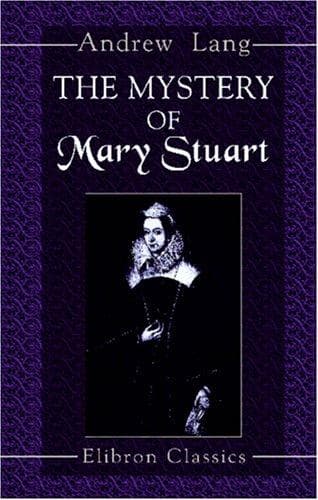
Mary, Queen of Scots, 1542-1587; Queens -- Scotland -- Biography; Scotland -- History -- Mary Stuart, 1542-1567
We begin to see that the Protestant party henceforward suspected the Queen
of regarding Bothwell as, to Mary, a useful man in case of trouble.
Bothwell first fled to Hermitage Castle in Liddesdale. As
Lieutenant-General on the Border he commanded the reckless broken clans,
the ‘Lambs,’ his own Hepburns, Hays, Ormistouns of Ormistoun, and others
who aided him in his most desperate enterprises; while, as Admiral, he had
the dare-devils of the sea to back him.
Lord James now became Earl of Moray, and all-powerful; and Bothwell,
flying to France, was storm-stayed at Holy Island, and held prisoner by
Elizabeth. His kinsfolk made interest for him with Mary, and, on February
5, 1564, she begged Elizabeth to allow him to go abroad. In England,
Bothwell is said to have behaved with unlooked-for propriety. ‘He is very
wise, and not the man he was reported to be,’ that is, not ‘rash,
glorious, and hazardous,’ Sir Harry Percy wrote to Cecil. ‘His behaviour
has been courteous and honourable, keeping his promise.’ Sir John Forster
corroborated this evidence. Bothwell, then, was not loutish, but, when he
pleased, could act like a gentleman. He sailed to France, and says himself
that he became Captain of the Scottish Guards, a post which Arran had once
held. In France he is said to have accused Mary of incestuous relations
with her uncle, the Cardinal.
During Bothwell’s residence in England, and in France, the equipoise of
Mary’s political position had been disturbed. She had held her ground,
against the extreme Protestants, who clamoured for the death of all
idolaters, by her alliance with _les politiques_, led by Moray and
Lethington. Their ambition, like hers, was to see the crowns of England
and Scotland united in her, or in her issue. Therefore they maintained a
perilous amity with England, and with Elizabeth, while plans for a meeting
of the Queens, and for the recognition of Mary as Elizabeth’s heir, were
being negotiated. But this caused ceaseless fretfulness to Elizabeth, who
believed, perhaps correctly, that to name her successor was to seal her
death-warrant. The Catholics of England would have hurried her to the
grave, she feared, that they might welcome Mary. In the same way, no
conceivable marriage for Mary could be welcome to Elizabeth, who hated the
very name of wedlock. Yet, while Bothwell was abroad, and while
negotiations lasted, there was a kind of repose, despite the anxieties of
the godly and their outrages on Catholics. Mary endured much and endured
with some patience. One chronic trouble was at rest. The feud between the
Hamiltons, the nearest heirs of the crown, and the rival claimants, the
Lennox Stewarts, was quiescent.
Public-domain text, read in full here on John Shaqi.
Reviews
Reviews
No reviews yet
Be the first to share your thoughts on this work.
Join the Discussion
Join the discussion
Sign in to leave a comment or review.
Sign InorCreate an account