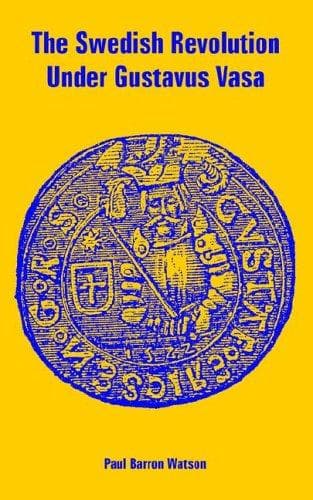
The Swedish Revolution Under Gustavus VasaWatson, Paul Barron
History
The Swedish Revolution Under Gustavus Vasa
Watson, Paul Barron
Gustav I Vasa, King of Sweden, 1496-1560; Sweden -- History -- Gustav I Vasa, 1523-1560
During three days the whole town now was given over to mirth and
merrymaking. These days seem like the lull that goes before a storm. All
strife was ended, all past injuries forgotten. The future seemed full of
promise, and the Swedish peasants went hurrying back to their firesides
to tell their wives and children of the peace and blessings promised
them by Christiern. But it was not yet. Scarce had the echo of warfare
died upon the wind when a frightful tragedy took place in Stockholm
which sent a thrill of horror to the heart of Europe. At noon on the
Wednesday following the coronation all the Swedish magnates with the
authorities of Stockholm were summoned to the citadel and ushered into
the august presence of their king. As they ranged themselves about the
great hall, the nobles and their wives, all wondering what this dismal
summons meant, they heard the castle gates grate upon their hinges, and
a cold shudder gradually spread among them, as the thought now flashed
upon them for the first time that they were no longer free. They had
been decoyed by the fulsome promises of their ruler into the trap which
he had laid. The noose was already tightening around their necks. Before
them, on the throne hallowed by memories of former rulers, sat their
tyrant, grim and lowering. Not a trace of mercy was visible in his
features. Through a long pause, awful in its uncertainty, they waited,
the cold sweat fast gathering on their brows. At length the pause was
ended. Archbishop Trolle, chuckling at the near prospect of his revenge,
stepped forward and addressed the throne. He began by portraying in
ardent language the sufferings he had undergone. He declared that the
cathedral at Upsala had been plundered while he was being besieged in
Stäket. He dwelt at great length on the wrong which had been done him in
the destruction of his castle. He drew attention to the conspiracy
entered into against him by certain of the magnates, and their united
oath never again to recognize him as archbishop. Finally, he denounced
the conspirators by name, and called upon the king to visit them with
the punishment which they deserved. At this Christina was summoned
before the throne and asked for an explanation of her husband's conduct.
She was at first struck dumb with terror; then, recovering herself, she
pleaded that her husband had been no more guilty than the other
conspirators, as would appear from the document which they all had
signed. Christiern, learning for the first time of this document,
demanded that it be produced. When this was done, and the king had
examined it to his heart's content, he gave it to his clerk to copy, and
called on each of the signers in turn to answer for his act. Christiern
with his Cabinet then withdrew, leaving the patriot leaders in the great
hall guarded by a body of Danish soldiers. At dusk two Danish officers
entered with lanterns, "like Judas Iscariot" says a contemporary, and
Public-domain text, read in full here on John Shaqi.
Reviews
Reviews
No reviews yet
Be the first to share your thoughts on this work.
Join the Discussion
Join the discussion
Sign in to leave a comment or review.
Sign InorCreate an account