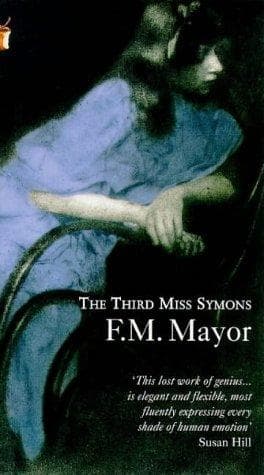
The Third Miss SymonsMayor, F. M. (Flora Macdonald)
General
The Third Miss Symons
Mayor, F. M. (Flora Macdonald)
England -- Social life and customs -- 19th century -- Fiction; Single women -- Fiction
"I wonder if I might read you a little piece out of my pamphlet, Aunt
Etta, just to make a few points clear. You see, I want to get you in
favour of our Union so much, because we feel that mistresses ought to be
co-operating with the servants, helping them to help themselves, and
then we shall get a really influential body of public opinion, which
will do valuable work in improving servants' conditions."
Henrietta writhed and struggled, and went off on frivolous pretexts, but
she could not escape the pamphlet, which was extremely able; so was the
author extremely able, but for a complete ignorance of human nature.
Henrietta heard all about Socialism, Land Taxes, and Adult Suffrage too,
and the more cross she became the more kindly and patiently Agatha
shouted, greeting any specially absurd ebullition with imperturbable
pleasantness, and "how interesting, I am _so_ anxious to get exactly at
your point of view." That niece was not invited again.
Henrietta often thought with affection and gratitude of the little old
aunt, who had died many years back; but, as she would have been the
first to own, her old age was not nearly so successful. Her house was
not a centre for everybody. She had some elderly ladies with whom she
exchanged visits, but young people disliked her, and children were
afraid of her.
Ever since she settled in England, she had made earnest attempts to curb
her temper. But the companion of a lifetime is not easily shaken off at
fifty-five, and more often than not she was quite unaware of crossness,
from which all around were suffering severely. On the very rare
occasions that she did realize it, she went back to the self she had
been as a child, descended from the pedestal of her age and generation,
and said she was sorry.
One day she and Annie had a long serious battle. The question in the
first instance was whether Annie had chipped off the nose of the china
pug-dog on the mantelpiece, a relic of the old house at Willstead;
Henrietta always had a tender feeling for relics. The arguments
marshalled by Annie were against Henrietta, but arguments never had much
weight with her. Besides, the battle passed on from the definite point
of the nose to vague but bitter attacks on character. Henrietta always
had in her mind an ideal servant, who accepted scolding not merely with
meekness but with gratitude, and was fond of quoting her, to the
exasperation of the real servants. After half an hour Annie began to cry
noisily, so that Henrietta's words were drowned. The interview came to
an end. Annie went downstairs and told Cook, but she wasted few tears or
thoughts on the matter, and almost at once they were laughing cheerfully
over their young men, as they sat at needlework.
Henrietta did think, fidgeting about the room while she thought, taking
things out of their places and putting them where they ought not to be,
in a fuss of discomfort. At last she rang the bell.
"The lamp, please, Annie."
Public-domain text, read in full here on John Shaqi.
Reviews
Reviews
No reviews yet
Be the first to share your thoughts on this work.
Join the Discussion
Join the discussion
Sign in to leave a comment or review.
Sign InorCreate an account