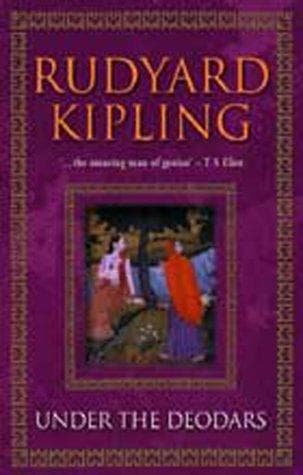
India -- History -- British occupation, 1765-1947 -- Fiction; Short stories, English
“Anywhere else they might be leaders, but they have no social weight in
this topsy-turvy land, and though they have been employed in clerical
work for generations they have no practical knowledge of affairs. A
ship’s clerk is a useful person, but he is scarcely the captain; and an
orderly-room writer, however smart he may be, is not the colonel. You
see, the writer class in India has never till now aspired to anything
like command. It wasn’t allowed to. The Indian gentleman, for thousands
of years past, has resembled Victor Hugo’s noble:
‘Un vrai sire
Chatelain
Laisse ecrire
Le vilain.
Sa main digne
Quand il signe
Egratigne
Le velin.
And the little egralignures he most likes to make have been scored
pretty deeply by the sword.”
“But this is childish and medheval nonsense!”
“Precisely; and from your, or rather our, point of view the pen is
mightier than the sword. In this country it’s otherwise. The fault
lies in our Indian balances, not yet adjusted to civilized weights and
measures.”
“Well, at all events, this literary class represent the natural
aspirations and wishes of the people at large, though it may not exactly
lead them, and, in spite of all you say, Orde, I defy you to find
a really sound English Radical who would not sympathize with those
aspirations.”
Pagett spoke with some warmth, and he had scarcely ceased when a well
appointed dog-cart turned into the compound gates, and Orde rose saying:
“Here is Edwards, the Master of the Lodge I neglect so diligently, come
to talk about accounts, I suppose.”
As the vehicle drove up under the porch Pagett also rose, saying with
the trained effusion born of much practice:
“But this is also my friend, my old and valued friend Edwards. I’m
delighted to see you. I knew you were in India, but not exactly where.”
“Then it isn’t accounts, Mr. Edwards,” said Orde, cheerily.
“Why, no, sir; I heard Mr. Pagett was coming, and as our works were
closed for the New Year I thought I would drive over and see him.”
“A very happy thought. Mr. Edwards, you may not know, Orde, was a
leading member of our Radical Club at Switebton when I was beginning
political life, and I owe much to his exertions. There’s no pleasure
like meeting an old friend, except, perhaps, making a new one. I
suppose, Mr. Edwards, you stick to the good old cause?”
“Well, you see, sir, things are different out here. There’s precious
little one can find to say against the Government, which was the main of
our talk at home, and them that do say things are not the sort o’ people
a man who respects himself would like to be mixed up with. There are no
politics, in a manner of speaking, in India. It’s all work.”
“Surely you are mistaken, my good friend. Why I have come all the way
from England just to see the working of this great National movement.”
Public-domain text, read in full here on John Shaqi.
Reviews
Reviews
No reviews yet
Be the first to share your thoughts on this work.
Join the Discussion
Join the discussion
Sign in to leave a comment or review.
Sign InorCreate an account