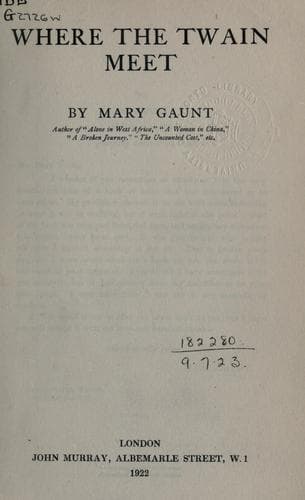
Black people -- Jamaica; Jamaica; Slavery -- Jamaica
Koromantyn, a Castle not far from Cape Coast, was the chief trading
place of the English along that shore, till De Ruyter knocked it about
their ears. The custom of the English, I judged, when they built a
Castle for themselves, and did not take it from some one else, was to
choose a site at the head of a bay and build close down to the water's
edge, but Koromantyn departs from the usual practice and was built on
high rising ground, a site the Portuguese (Portugais the old mariners
called them) themselves might have chosen. I have thought of it many
a time since I came to Jamaica, for always the slave risings--and the
risings were many--were headed by the Koromantyns. Even now, guarding
nothing, for the courtyard is overgrown with tropical vegetation, its
ruined walls rise up tall and steep and straight, and at their foot
among the rubble and coarse grass, lie rusting the cannon that once made
them formidable.
Remember, it was not only the black men who suffered, for if with cruel
force upon the sons of Ham fell the primeval curse, the venturesome men
who dared so much for greed and adventure were not exempt. And they were
venturesome. Reading between the lines as we look up the old records,-we
feel that the trials endured in the finding of the Poles were more than
equalled by what these traders of old must have borne in their search
for wealth, the wealth ofttimes being for someone else. The gold is only
found further inland now, the elephant is gone, and the trade in men is
dead. Dead, yes; but it is impossible to forget here in Jamaica, or as
you wander along the Guinea Coast. The sands of the sea cry the story,
the shame, shame, shame of it! the tumbling waves take it up, and insist
as they crash on the sand in the still hot noonday, or in the glory of
the moonlight night, that the end is not yet. I did not understand
what they cried to me then, but Jamaica cries out, “Here, here, is the
unfinished work of those old time slavers, here is the job incomplete,
left for Britain to finish as best she may.” One hot day in March I
left Cape Coast and came by the sea-shore, ten miles or more, along the
yielding sand, just beyond reach of the furious white surf, but not
out of the reach of its spray, and the memories of the men of old, the
men who traded here when Cromwell ruled in England, when Queen Anne
sat on the throne, when the unwelcome Georges came over from Hanover,
crowded thick in every grove of coconut palms, rose to meet me on every
grassy headland. The footsteps of the hammock bearers were clearly
marked, and the waves came sweeping up and swept them away, the black
crabs, like so many pincushions on stilts, raced after the receding
waters, and the wading-birds stalked over the half-liquid sand seeking
their livelihood. Overhead was the heavy blue African sky, on the right,
the dark blue sea with white-topped breakers that rushed from the Pole,
half a world away, to fling themselves in thunderous clamour upon the
Public-domain text, read in full here on John Shaqi.
Reviews
Reviews
No reviews yet
Be the first to share your thoughts on this work.
Join the Discussion
Join the discussion
Sign in to leave a comment or review.
Sign InorCreate an account