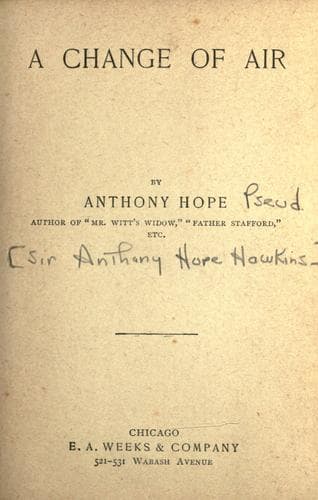
Country homes -- Fiction; England -- Social life and customs -- 19th century -- Fiction; Fame -- Fiction; Poets -- Fiction
Tora returned to the house, still wondering. She was very angry with
Dale, and prepared to think no good of him. Was it possible that she
and the Colonel had been hasty in stretching out the hand of welcome to
Mrs. Hodge and her daughter? For all her independence, Tora liked to
have Mrs. Delane's _imprimatur_ on the women of her acquaintance. She
thought she would have a word with the Colonel, and went to seek him in
his study. He was not there, but it chanced that there lay on the table
a copy of Dale's first published volume, "The Clarion." Three-quarters
of the little book were occupied with verses on matters of a more or
less public description--beliefs past and future, revolutions effected
and prayed for, and so forth; the leaves bore marks of use, and
evidently were often turned by the Colonel. But bound up with them was
a little sheaf of verses of an amatory character: where these began,
the Colonel's interest appeared to cease, for the pages were uncut;
he had only got as far as the title. It was not so with his daughter.
Having an idle hour and some interest in the matters and affairs of
love, she took a paper-knife and sat down to read. Poets are, by
ancient privilege, _legibus soluti_, and Dale certainly reveled in his
freedom. Still, perhaps, the verses were not in reality so very, very
atrocious as they unhappily appeared to the young lady who now read
them. Tora was accustomed to consider herself almost a revolutionary
spirit, and her neighbors, half in earnest, half in joke, encouraged
the idea; but her revolutions were to be very strictly confined, and
the limits of her free-thought were marked out by most unyielding metes
and bounds--bounds that stopped very short at the church door and on
the domestic threshold. This frame of mind is too common to excite
comment, and it had been intensified in her by the social surroundings
against which she was in mock revolt. Dale's freedom knew no trammels,
or had known none when he wrote "The Clarion"; nothing was sacred to
him except truth, everything as nothing beside reason, reason the
handmaid of passion, wherein the spirit and individuality of each man
found their rightful expression. This theory, embodied in a poet's
fancy and enlivened by a young man's ardor, made fine verses, but
verses which startled Tora Smith. She read for half an hour, and then,
flinging the book down and drawing a long breath, exclaimed: "I can
believe anything of him now!"
And she had had this man to dinner! And that girl! Who was that girl?
Public-domain text, read in full here on John Shaqi.
Reviews
Reviews
No reviews yet
Be the first to share your thoughts on this work.
Join the Discussion
Join the discussion
Sign in to leave a comment or review.
Sign InorCreate an account