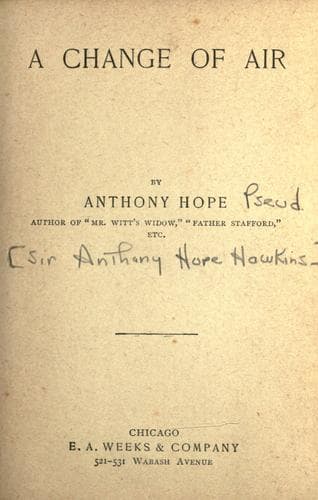
Country homes -- Fiction; England -- Social life and customs -- 19th century -- Fiction; Fame -- Fiction; Poets -- Fiction
"I dessay, now," said the Mayor, "that you aint been in the way of
seein' the Squire lately?"
"I see him last when he signed my lease," answered the Alderman, with a
grim smile, "and that's a month come to-morrow."
"I had a conversation with him yesterday, and after touchin' on the
matter of that last pavin' contract,--he'd heard o' your son-in-law
gettin' it, Johnstone,--he got talkin' about Mr. Bannister."
"Aye? did he?"
"And about his noo book. 'It's a blessin',' he says, 'to see a young
man of such promise shakin' himself free of that pestilential trash.'
He meant your opinions by that, Johnstone."
"Supposing 'e did, what then? I don't label my opinions to please the
customers like as some do their physic."
The Mayor was not in a fighting mood; his mind was busy with
speculations, and he ignored the challenge.
"Queer start Mr. Bannister showin' up at the church bazaar, eh? Spent
a heap o' money, too. I met Mr. Hume, and asked him about it, and he
said----"
"It wan't no business o' yours, didn't he?"
"Mr. Hume--he's a gentleman, Johnstone," remarked the Mayor in grave
rebuke.
"Well, what did 'e say?"
"That where the carcass was, the eagles 'ud be gathered together."
Mr. Johnstone smiled a smile of pity for the Mayor's density.
"Well, what do you suppose he meant?" asked the Mayor in reply to the
smile.
"Where the gells is, the lads is," said the Alderman, with a wink, as
he passed on his way.
This most natural, reasonable, and charitable explanation of Dale's
conduct in identifying himself with the Vicar's pastoral labors had,
oddly enough, suggested itself to no one else, unless it might be
to Captain Gerard Ripley. His presence had been hailed on the one
side, and anathematized on the other, as an outward sign of an inward
conversion, and his lavish expenditure had been set down to a repentant
spirit rather than a desire to gratify any particular stall-holder. The
Vicar had just read "Amor Patriæ," and he remarked to everyone he met
that the transition from an appreciation of the national greatness to
an adhesion to the national church was but a short step.
Unhappily, in a moment of absence, he chanced to say so to Colonel
Smith, who was at the bazaar for the purpose of demonstrating his
indifferent impartiality toward all religious sects.
"You might as well say," answered the Colonel in scorn, "that because a
man stands by the regiment he's bound to be thick with the chaplain."
Public-domain text, read in full here on John Shaqi.
Reviews
Reviews
No reviews yet
Be the first to share your thoughts on this work.
Join the Discussion
Join the discussion
Sign in to leave a comment or review.
Sign InorCreate an account