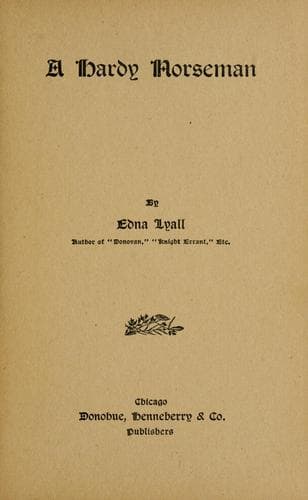
British -- Norway -- Fiction; Conduct of life -- Fiction; Norwegians -- England -- Fiction
And yet it was out of this very torture of realization that his comfort
at last sprung—such comfort at least as he was at present capable of
receiving. We must all have some sort of future to look to, some sort of
aim before us, or life would be intolerable. The veriest beggar in the
street concentrates his thought on the money to be made, or the shelter
to be gained for the coming night. And there came, fortunately, to
Frithiof, jilted, ruined, bereaved as he was, one strong desire—one firm
resolve. He would pay off his father’s debts to the last farthing; he
would work, he would slave, he would deny himself all but the bare
necessities of life. The name of Falck should yet be redeemed; and a
glow of returning hope rose in his heart as he remembered his father’s
parting words, “I look to you, Frithiof, to carry out the aims in which
I myself have failed, to live the life I could wish to have lived.” Yet
how different all had been when those words had been spoken! The
recollection of them did him good—brought him, as it were, back to life
again—but at the same time they were the most cruel pain.
He saw again the harbor at Bergen, the ships, the mountains, the busy
quay; he saw his father so vividly that it seemed to him as if he must
actually be before him at that very moment, the tone of his voice rang
in his ears, the pressure of his hand seemed yet to linger with him.
What wonder that it should still be so fresh in his memory? It was only
three days ago. Only three days! Yet the time to look back on now seemed
more like three years. With amazement he dwelt on the fact, thinking, as
we mostly do in sudden trouble, how little time it takes for things to
happen. It is a perception that does not come to us in the full swing of
life, when all seems safe and full of bright promise, any more than in
yachting it troubles us to reflect that there is only a plank between
ourselves and the unfathomed depths of the sea. We expect all to go
well, we feel no fear, we enjoy life easily, and when disaster comes its
rude haste astounds us—so much is changed in one sudden, crushing blow.
He remembered how he had whistled the “Bridal Song of the Hardanger,” as
he cheerfully paced the deck full of thoughts of Blanche and of the
bright future that was opening before him. The tune rang in his ears now
with a mournful persistence. He buried his face in his hands, letting
the flood of grief sweep over him, opposing to it no thought of comfort,
no recollection of what was still left to him. If Blanche had been
faithful to him all might have been different; her father would never
have taken away the agency if she had told him the truth when she first
got home; the Iceland expedition might have failed, but his father could
have got voluntary agreement with his creditors, he himself might
perhaps have been put at the head of the branch at Stavanger, all would
have been well.
Public-domain text, read in full here on John Shaqi.
Reviews
Reviews
No reviews yet
Be the first to share your thoughts on this work.
Join the Discussion
Join the discussion
Sign in to leave a comment or review.
Sign InorCreate an account