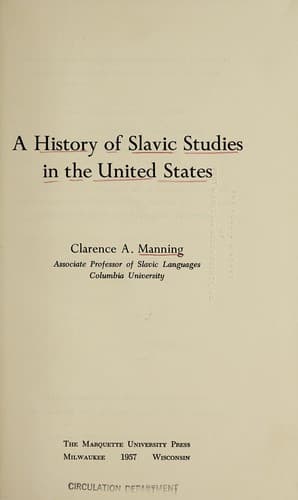
A history of Slavic studies in the United States — John Shaqi
A history of Slavic studies in the United StatesManning, Clarence Augustus
History
A history of Slavic studies in the United States
Manning, Clarence Augustus
Slavic philology -- Study and teaching; Slavs -- History -- Study and teaching
During the 1920’s those American universities most interested in Slavic
subjects developed rather independently. In the field of history, there
were few real innovations. During the twenties, and especially during
the period of the New Economic Policy in the USSR, a few young men were
able, on fellowships from various institutions, to study in the Soviet
universities and familiarize themselves with conditions there. Among
these men we may mention two important scholars of the present time:
Professor Philip Mosely of the American Council of Foreign Relations,
formerly of Columbia University, and Professor Geroid T. Robinson of
Columbia. Other men similarly visited other Slavic lands for varying
periods. Their studies have been an application of the accepted method
of historical research to the history of the Slavic countries by men who
were as well trained in Slavic as earlier generations had been in French
and German.
The situation was different in the field of language, literature and
culture, in the general sense of the word, for these subjects had been
very largely ignored in the earlier periods except in those institutions
where Slavic departments had been established. Even the masterpieces of
Russian literature had been handled purely on the basis of translations,
with few efforts to equate them with the general life of Russia. This
had produced the jaundiced view of Russian literature satirized by
Stephen Leacock of McGill University. In fact during a large part of the
period between the wars, one of the largest groups of students of Slavic
literature were persons who had no desire to learn the language or to
read Slavic literature in the original. They were merely interested in
including Russian in courses of comparative literature, or they were
instructors obliged to treat some of the Russian masterpieces in
translation.
This broad cultural need was met in different ways by the various Slavic
departments. Thus, during these years, the department at the University
of California, under Professor George Rapall Noyes, decidedly stressed
the development of translation, and courses in which a knowledge of
Russian was not primarily required. The department grew steadily but
largely maintained its original staff supplemented by visiting
lecturers. This policy continued until the eve of World War II. During
most of this time Professor Noyes did not make any special effort to
establish contacts with the Slavic groups on the Pacific coast.
Public-domain text, read in full here on John Shaqi.
Reviews
Reviews
No reviews yet
Be the first to share your thoughts on this work.
Join the Discussion
Join the discussion
Sign in to leave a comment or review.
Sign InorCreate an account