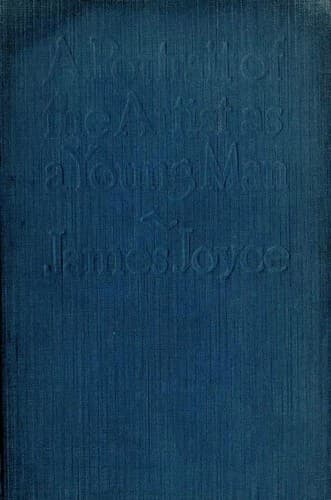
A Portrait of the Artist as a Young ManJoyce, James
General
A Portrait of the Artist as a Young Man
Joyce, James
Artists -- Fiction; Autobiographical fiction; Bildungsromans; Dublin (Ireland) -- Fiction; Young men -- Fiction
—Tate made you buck up the other day, Heron went on, about the heresy
in your essay.
—I’ll tell him tomorrow, said Boland.
—Will you? said Stephen. You’d be afraid to open your lips.
—Afraid?
—Ay. Afraid of your life.
—Behave yourself! cried Heron, cutting at Stephen’s legs with his cane.
It was the signal for their onset. Nash pinioned his arms behind while
Boland seized a long cabbage stump which was lying in the gutter.
Struggling and kicking under the cuts of the cane and the blows of the
knotty stump Stephen was borne back against a barbed wire fence.
—Admit that Byron was no good.
—No.
—Admit.
—No.
—Admit.
—No. No.
At last after a fury of plunges he wrenched himself free. His
tormentors set off towards Jones’s Road, laughing and jeering at him,
while he, half blinded with tears, stumbled on, clenching his fists
madly and sobbing.
While he was still repeating the _Confiteor_ amid the indulgent
laughter of his hearers and while the scenes of that malignant episode
were still passing sharply and swiftly before his mind he wondered why
he bore no malice now to those who had tormented him. He had not
forgotten a whit of their cowardice and cruelty but the memory of it
called forth no anger from him. All the descriptions of fierce love and
hatred which he had met in books had seemed to him therefore unreal.
Even that night as he stumbled homewards along Jones’s Road he had felt
that some power was divesting him of that suddenwoven anger as easily
as a fruit is divested of its soft ripe peel.
He remained standing with his two companions at the end of the shed
listening idly to their talk or to the bursts of applause in the
theatre. She was sitting there among the others perhaps waiting for him
to appear. He tried to recall her appearance but could not. He could
remember only that she had worn a shawl about her head like a cowl and
that her dark eyes had invited and unnerved him. He wondered had he
been in her thoughts as she had been in his. Then in the dark and
unseen by the other two he rested the tips of the fingers of one hand
upon the palm of the other hand, scarcely touching it lightly. But the
pressure of her fingers had been lighter and steadier: and suddenly the
memory of their touch traversed his brain and body like an invisible
wave.
A boy came towards them, running along under the shed. He was excited
and breathless.
—O, Dedalus, he cried, Doyle is in a great bake about you. You’re to go
in at once and get dressed for the play. Hurry up, you better.
—He’s coming now, said Heron to the messenger with a haughty drawl,
when he wants to.
The boy turned to Heron and repeated:
—But Doyle is in an awful bake.
—Will you tell Doyle with my best compliments that I damned his eyes?
answered Heron.
—Well, I must go now, said Stephen, who cared little for such points of
honour.
Public-domain text, read in full here on John Shaqi.
Reviews
Reviews
No reviews yet
Be the first to share your thoughts on this work.
Elsewhere in the archive
Join the Discussion
Join the discussion
Sign in to leave a comment or review.
Sign InorCreate an account