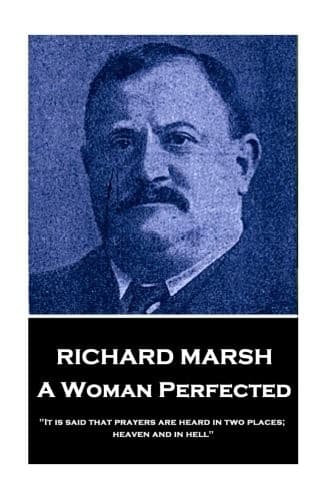
Children of the rich -- Fiction; England -- Social life and customs -- Fiction; Inheritance and succession -- Fiction
On the Saturday the storm broke on her from a quarter for which, at
the moment, she was unprepared. Word had been brought that the Earl
and Countess of Mountdennis were in the drawing-room, waiting to see
her. Her first impulse was to send an excuse; the mere announcement of
their presence made her conscious of a sinking heart; but it was not
her way to excuse herself because she feared unpleasantness; second
thoughts prevailed. She recognized that, from their point of view,
they were entitled to see her, even in these first days of her
bereavement. She needed none to tell her that the purport of their
presence was not likely to be an agreeable one; that they probably had
not come upon an errand of love; she had too shrewd a notion of their
characters. Under the circumstances the last thing she might expect
from them was sympathy; she was aware that they had a standard of
their own; and that according to that the more a person stood in need
of sympathy the less likely they were to vouchsafe it. Still they were
Robert's parents; it was for her to consider him rather than herself;
so, for the first time since her father was taken ill she ventured
into the drawing-room.
The frigidity of the reception which they accorded her was ominous;
she knew at once that so far from having deserved their sympathy she
had incurred their displeasure. The last time they had met they had
both of them taken her, not only metaphorically, but literally, to
their bosoms; showering oh her tokens of affection which erred, if
anything, on the side of redundance. Now the lady permitted her to
touch a fish-like hand, taking care not to allow her to approach too
near; while the gentleman merely bowed. It was he who spoke first, as
if he were addressing some one whose behaviour had both pained and
shocked him.
"We only learnt this morning, actually by the merest accident, that
your father was not only dead, but buried."
"Not only dead but buried!"
This was the Countess. It was a standing joke that, if they were both
engaged in the same conversation, when he did not echo her she echoed
him. If they ever differed it must have been in private; in public
their agreement was so complete as sometimes to approach almost to the
verge of the exasperating.
"We were not even aware that your father was unwell; we had received
positively no information on the subject whatever."
"Positively none whatever!"
"It seems to me--to us--a most extraordinary thing that you should not
have apprised us of the condition of your father's health; that you
should have given us no intimation of any kind; that you should have
kept us in utter ignorance."
"In utter ignorance!"
"May I ask, may we ask, Miss Lindsay, why you have not treated us with
at least some approximation to that consideration which our position
obviously demanded?"
"Our position obviously demanded!"
"To begin with, it was all very sudden; and then I didn't know where
you were.
Public-domain text, read in full here on John Shaqi.
Reviews
Reviews
No reviews yet
Be the first to share your thoughts on this work.
Elsewhere in the archive
Join the Discussion
Join the discussion
Sign in to leave a comment or review.
Sign InorCreate an account