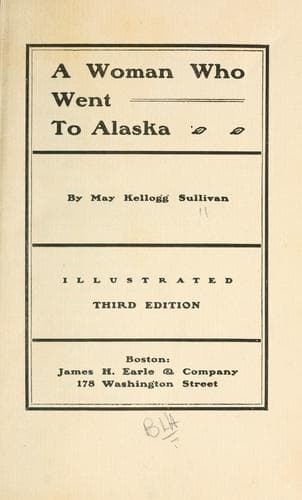
Alaska -- Description and travel; Frontier and pioneer life -- Alaska
Many were the jolly times we now had. How the jokes flew past each other
over the puddings, and the crisp pies needed almost no other seasoning.
How cheerfully "the boys" brought wood and water and counted it reward
enough if they only received a smile from little Alma. Many a man was
glad enough, too, to render such service for a meal or lunch of hot
coffee and doughnuts, especially such good, big, motherly ones as Mary
made, and there was no lack of men helpers. How the coffee steamed, the
hot bread and meats smoked, and the soup odors tantalized the
olfactories of hundreds of "tenderfeet" with their lusty Alaska
appetites, which were increased by an open air life such as all in those
days were living.
When at last we were summoned to our work, on Number Nine, the Swedish
women pressed my hand cordially, leaving a good-sized bill in it at the
same time, saying: "When you get through on Number Nine come back to us;
we need you." I thanked them gratefully and said good-bye.
The English girl and myself were soon settled in our little tent with
its clean new floor on the hillside of claim Number Nine. No tree was to
be seen on the long, rolling hills, and only an occasional boulder on
some summit like Anvil Peak, perched as a sentinel above us. A few wild
flowers bloomed on the tundra, and the waters of the little stream
gurgled over the soft slate pebbles that strewed its course; but the
season so far was a dry one, and more water was needed before much could
be done at sluicing. Miners were not happy at the prospect of a dry
season, which meant a stoppage of all mining operations, and eagerly
scanned the heavens for rain indications. A small force of men were at
work night and day. On Thursday, July twelfth, eleven hundred dollars in
gold dust was taken from the sluice boxes in the creek, and two days
afterwards twelve thousand dollars, with which the owner of the claim
was much dissatisfied, calling them small clean-ups.
A few hundred feet up stream, on Number Ten, the machinery of C. D. Lane
whirred constantly. On the upper end of Number Nine a small new machine
called a separator was put in by some men from New York who had taken a
lay on the claim; but this scheme was not successful.
Seeing men at work prospecting along the "benches," as the banks of a
stream or hillsides are called by miners, and having a woman's
proverbial curiosity, after my work was done I climbed the hill to
investigate. The prospectors had left after digging a hole about six
feet deep and four square, evidently having satisfied themselves as to
what the ground contained. Into this hole I descended to feel of the
cold, wet earth and inspect the walls.
Public-domain text, read in full here on John Shaqi.
Reviews
Reviews
No reviews yet
Be the first to share your thoughts on this work.
Elsewhere in the archive
Join the Discussion
Join the discussion
Sign in to leave a comment or review.
Sign InorCreate an account