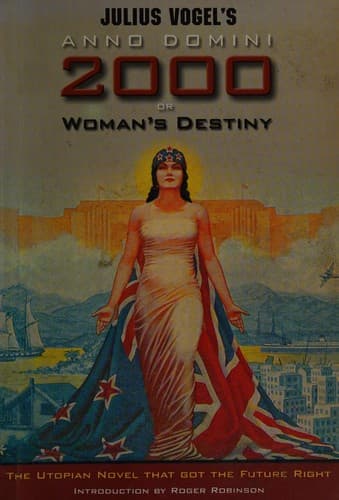
Anno Domini 2000; or, Woman's DestinyVogel, Julius, Sir
Science
Anno Domini 2000; or, Woman's Destiny
Vogel, Julius, Sir
Feminist fiction; New Zealand -- Fiction; Two thousand, A.D. -- Fiction; Utopian fiction; Utopias -- Fiction; Women -- Fiction
cheap material; for the probabilities were, the substance would be
cheaply producible. Each aerial vessel should carry three or four times
the number of separate fans and machinery necessary to obtain buoyancy.
The same substances probably could be used to procure buoyancy in the
improbable event of all the machines breaking down. Supposing, as he
suspected would be the case, that the resultant gas of the decomposition
was lighter than air, a hollow case of a strong elastic fabric could be
fastened to the whole of the outside exposed surface of the machine; and
this could be rapidly inflated by the use of the same material. The
movement of a button should be sufficient to produce decomposition, and
as a consequence to charge the whole of this casing with gas lighter
than the air. As the heat attending the decomposition subsided the
elastic fabric would sufficiently collapse. The danger then would not be
so much of descending too rapidly through the atmosphere as of remaining
in it; a difficulty, however, which a system of valves would easily
overcome.
The Institution offered twenty-five thousand pounds for a discovery on
the lines indicated; and the Government offered seventy-five thousand
pounds more on the condition that they should have the right to purchase
the invention and preserve it as a secret, they supplying the material
for civil purposes, but retaining absolute control over it for military
purposes. This proviso was inserted because of the opinion of the writer
that the effects he looked for might not so much depend on the chemical
composition of the substances as on their molecular conditions, and that
these might defy the efforts of analysts. If he was wrong, and the
nature of the compound could be ascertained by analysis, the Government
need not buy the invention; they could leave the discoverer to enjoy its
advantages by patenting it, and share with other nations the uses that
could be made of it for purposes of warfare.
Public-domain text, read in full here on John Shaqi.
Reviews
Reviews
No reviews yet
Be the first to share your thoughts on this work.
Elsewhere in the archive
Join the Discussion
Join the discussion
Sign in to leave a comment or review.
Sign InorCreate an account