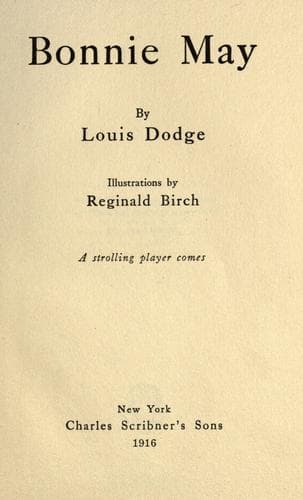
Actresses -- Fiction; Families -- Fiction; Foster children -- Fiction; Girls -- Fiction; Social classes -- Fiction
As he emerged from the vestibule and stood for a moment on the top step
he noted that the familiar conflict between the departing daylight and
the long files of street-lamps up and down the avenue was being waged.
In the country, no doubt, this hour would be regarded as a part of the
day; but in the city it was being drawn ruthlessly into the maw of
night. There was never any twilight on the avenue.
Already countless thousands of people had had dinner, and were
thronging the avenue in that restless march which is called the pursuit
of pleasure.
He slipped into the human current and disappeared just a moment too
soon to observe that an automobile swerved out from its course and drew
up in front of the mansion.
A youthful-looking old lady with snowy hair and with small, neatly
gloved hands, pushed open the door and emerged. With the manner of one
who repeats a request she paused and turned.
“Do come in, Colonel,” she called into the shadowy recesses of the car.
A gray, imposing-appearing man with a good deal of vitality still
showing in his eyes and complexion smiled back at her inscrutably. “Go
on,” he said, tucking his cigar beneath the grizzled stubble on his
upper lip, and bringing his hand down with a large gesture of leisurely
contentment. “You’ll be all right. I don’t mind waiting.”
And Mrs. Harrod proceeded alone to make her call.
By the most casual chance Mrs. Baron was standing at her sitting-room
window when the car stopped before the house, and when she perceived
that it was Mrs. Harrod--Amelia Harrod, as she thought of her--who was
crossing the sidewalk, she underwent a very remarkable transformation.
So complete a transformation, indeed, that Bonnie May, who was somewhat
covertly observing her, sprang softly to her feet and became all
attention.
Mrs. Baron’s face flushed--the child could see the heightened color in
one cheek--and her whole attitude expressed an unwonted eagerness, a
childish delight.
The truth was that Mrs. Harrod was one of the old friends who had
seemed to Mrs. Baron to be of the deserters--one whose revised visiting
list did not include the Barons. And they had been girls together, and
intimates throughout their married lives--until the neighborhood had
moved away, so to speak, and the Barons had remained.
It is true that, despite Mrs. Baron’s fancies, Mrs. Harrod had remained
a fond and loyal friend, though she had reached an age when social
obligations, in their more trivial forms, were not as easily met as
they had been in earlier years. And it may also be true that something
of constraint had arisen between the two during the past year or so,
owing to Mrs. Baron’s belief that she was being studiously neglected,
and to Mrs. Harrod’s fear that her old friend was growing old
ungracefully and unhappily.
Public-domain text, read in full here on John Shaqi.
Reviews
Reviews
No reviews yet
Be the first to share your thoughts on this work.
Join the Discussion
Join the discussion
Sign in to leave a comment or review.
Sign InorCreate an account