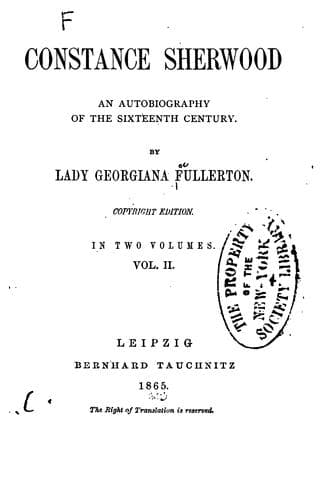
Constance Sherwood: An Autobiography of the Sixteenth CenturyFullerton, Georgiana
History
Constance Sherwood: An Autobiography of the Sixteenth Century
Fullerton, Georgiana
Great Britain -- History -- Elizabeth, 1558-1603 -- Fiction
"Her majesty," he said, "was greatly incensed against the Bishop of
Ross, and had determined to put him to death; but that she was
dissuaded from it by her council; and that he prayed God Catholics
should not fare worse now that Ridolfi's plot had been discovered to
declare her highness illegitimate, and place the Queen of Scots on the
throne, which had moved her to greater anger than even the rising in
the north.
"And touching the Duke of Norfolk," Mistress Ward did ask, "what is
like to befal him?"
Mr. Rookwood said, "His grace had been removed from the Tower to his
own house on account of the plague; but it is reported the queen is
more urgent against him than ever, and will have his head in the end."
"If her majesty will not marry monsieur," Mistress Ward said, "it will
fare worse with recusants."
Upon which one of the young gentlemen cried out, "'Tis not her majesty
will not have him; but monsieur will not have her. My Lord of Oxford,
who is to marry my Lord Burleigh's daughter, said yesterday at the
tennis court, that that matter of monsieur is grieviously taken on her
grace's part; but that my lord is of opinion that where amity is so
needful, her majesty should stomach it; and so she doth pretend to
break it off herself by reason of her religious scruples."
At the which both brothers did laugh, but Mr. Rookwood bade them have
a care how they did suffer their tongues to wag anent her grace and
such matters as her grace's marriage; which although in the present
company might be without danger, was an ill habit, which in these
times was like to bring divers persons into troubles.
"Hang it!" cried the eldest of his sons, who was of a well-pleasing
favor and exceeding goodly figure; "recusants be always in trouble,
whatsoever they do; both taxed for silence and checked for speech, as
the play hath it. For good Mr. Weston was racked for silence last week
till he fainted, for that he would not reveal what he had heard in
confession from one concerned in Ridolfi's plot; and as to my Lord
Morley, he hath been examined before the council, touching his having
said he would go abroad poorly and would return in glory, which he did
speak concerning his health; but they would have it meant treason."
"Methinks, Master Basil," said his father, "thou art not like to be
taxed for silence; unless indeed on the rack, which the freedom of thy
speech may yet bring thee to, an thou hast not more care of thy words.
See now, thy brother keeps his lips closed in modest silence."
"Ay, as if butter would not melt in his mouth," cried Basil, laughing.
Public-domain text, read in full here on John Shaqi.
Reviews
Reviews
No reviews yet
Be the first to share your thoughts on this work.
Elsewhere in the archive
Join the Discussion
Join the discussion
Sign in to leave a comment or review.
Sign InorCreate an account