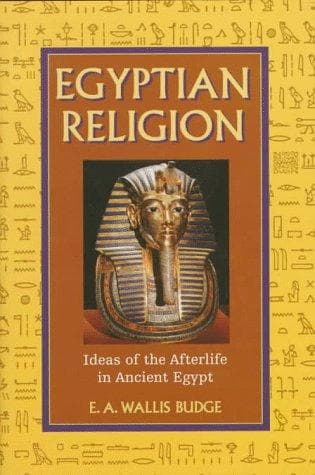
Egyptian Ideas of the Future LifeBudge, E. A. Wallis (Ernest Alfred Wallis), Sir
ReligionComparative
Egyptian Ideas of the Future Life
Budge, E. A. Wallis (Ernest Alfred Wallis), Sir
Egypt -- Religion; Eschatology, Egyptian; Future life
11. "Praise be unto thee, O R[=a], thou exalted Power, who dost enter
into the habitations of Ament, behold [thy] body is Temu.
12. "Praise be unto thee, O R[=a], thou exalted Power, who dost enter
into the hidden place of Anubis, behold, [thy] body is Khepera.
13. "Praise be unto thee, O R[=a], thou exalted Power, whose duration
of life is greater than that of the hidden forms, behold [thy] body is
Shu.
14. "Praise be unto thee, O R[=a], thou exalted Power, .... behold
[thy] body is Tefnut.
15. "Praise be unto thee, O R[=a], thou exalted Power, who bringest
forth, green things in their season, behold [thy] body is Seb.
16. "Praise be unto thee, O R[=a], thou exalted Power, thou mighty
being who dost judge,... behold [thy] body is Nut.
17. "Praise be unto thee, O R[=a], thou exalted Power, the lord....
behold [thy] body is Isis.
18. "Praise be unto thee, O R[=a], thou exalted Power, whose head
giveth light to that which is in front of thee, behold [thy] body is
Nephthys.
19. "Praise be unto thee, O R[=a], thou exalted Power, thou source of
the divine members, thou One, who bringest into being that which hath
been begotten, behold [thy] body is Horus.
20. "Praise be unto thee, O R[=a], thou exalted Power, who dost dwell
in and illumine the celestial deep, behold [thy] body is Nu."
[Footnote: For the text see _Annales du Musée Guimet: Le Tombeau de
Seti 1_. (ed. Lefébure), Paris, 1886, pl. v.]
In the paragraphs which follow R[=a] is identified with a large number
of gods and divine personages whose names are not of such common
occurrence in the texts as those given above, and in one way or another
the attributes of all the gods are ascribed to him. At the time when the
hymn was written it is clear that polytheism, not pantheism as some
would have it, was in the ascendant, and notwithstanding the fact that
the Theban god Amen was gradually being forced to the headship of the
companies of the gods of Egypt, we find everywhere the attempt being
made to emphasize the view that every god, whether foreign or native,
was an aspect or form of R[=a].
Public-domain text, read in full here on John Shaqi.
Reviews
Reviews
No reviews yet
Be the first to share your thoughts on this work.
Elsewhere in the archive
Join the Discussion
Join the discussion
Sign in to leave a comment or review.
Sign InorCreate an account