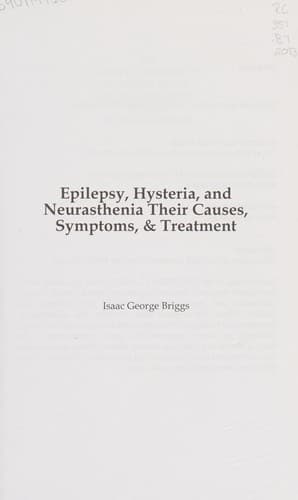
Epilepsy, Hysteria, and Neurasthenia: Their Causes, Symptoms, & TreatmentBriggs, Isaac George
Science
Epilepsy, Hysteria, and Neurasthenia: Their Causes, Symptoms, & Treatment
Briggs, Isaac George
Epilepsy; Hysteria; Nervous system -- Diseases; Neurasthenia
Victims who have seizures with some regularity at a certain time, should
take the three doses in one, two hours before the attack is expected. If
there are long intervals between attacks, cease taking bromides after one
fit and recommence three weeks before the next seizure is apprehended. When
there is an interval of six months or more between attacks, take no drugs.
Bromides in solution are unpalatable, patients grow careless of regularity
and dosage.
You must learn from your doctor and your own experience the prescription,
time and dose best suited to your case, and then _never miss a dose until
you have been free from fits for two years_, for the beneficial action of
bromide depends on the tissues becoming and remaining "saturated" with the
drug. Never give up bromides suddenly after long use, but gradually reduce
the dose.
It is just when the disease has been brought under control, that patients
consider further doctor's bills an unnecessary expense, with the result
that a little later the fits recur, and a tedious treatment has to be
commenced over again.
No value can be placed on any specific for epilepsy until it has been
thoroughly tested for some years, and so proved that its effects are
permanent, for almost any treatment is of value for a time, possibly
through the agency of suggestion.
* * * * *
CHAPTER XX
PATENT MEDICINES
"Men who prescribe purifications and spells and other illiberal
practices of like kind."--Hippocrates.
"...Corrupted
By spell and medicines bought of mountebanks."
"Othello." Act I.
Carlyle said the world consisted of "so many million people, _mostly
fools_"; and he was right, for to public credulity alone is due the immense
growth of the patent-medicine trade.
It was formerly thought that for each disease, a specific drug could be
found, but this idea is exploded. The doctor determines the exact condition
of his patient, considers how he best may assist nature or prevent death,
and selects suitable drugs. He carefully notes their action and modifies
his treatment as required. The use of set prescriptions for set diseases is
obsolete; the doctor of to-day treats the patient, not the disease.
A few patent medicines are of limited value; many are made up from
prescriptions culled from medical works, and the rest are frauds, like
potato starch. The evil lies in charging from three to four hundred times a
just price, in ascribing to a medicine which may be good for a certain
disorder, a "cure-all" virtue it does not possess, and in inducing ignorant
people to take powerful drugs, reckless of results.
Public-domain text, read in full here on John Shaqi.
Reviews
Reviews
No reviews yet
Be the first to share your thoughts on this work.
Join the Discussion
Join the discussion
Sign in to leave a comment or review.
Sign InorCreate an account