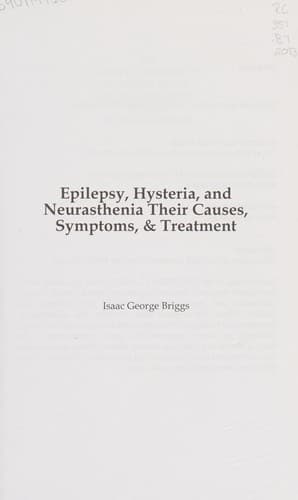
Epilepsy, Hysteria, and Neurasthenia: Their Causes, Symptoms, & TreatmentBriggs, Isaac George
Science
Epilepsy, Hysteria, and Neurasthenia: Their Causes, Symptoms, & Treatment
Briggs, Isaac George
Epilepsy; Hysteria; Nervous system -- Diseases; Neurasthenia
Keep a keen lookout for symptoms of over-effort. Sleepiness, languor, a
vacant expression, forehead wrinkled, eyebrows knit, eyes dull, sunken and
surrounded by dark rings, twitchings, restlessness, or loss of appetite are
all warnings that the pace is too strong for the child.
"These are the cases in which the School Board--who ordain that if
children are well enough to play or run errands, they are well enough
to attend school--should be defied."
This defiance must of course be reinforced by a doctor's certificate.
To the healthy, the strain of preparing for and enduring an examination is
tremendous; to highly strung children it is dangerous. Home-work should be
forbidden in spite of the authorities. Let the child join in the sports of
the school as much as possible.
School misdemeanours form a thorny problem, for discipline must be
maintained, and a stern but just discipline is very wholesome for this
type, who are too apt to assume that because they are abnormal, they can be
idle and refractory. On the other hand, parents should promptly and
vigorously object to their children being punished for errors in lessons,
or struck on the head.
Diet. Food, while being nourishing, and easily digested, must not be
stimulating or "pappy". Meat, condiments, tea, coffee and alcohol are
highly undesirable, a child's beverage being milk and water.
Meals should be ready at regular hours, and capricious appetites should
freely be humoured among suitable foods, served in appetizing form to tempt
the palate. Let them chatter, but see they do not get the time to talk by
bolting their food.
Most children can chew properly soon after they are two, but they are never
taught. Their food is "mushy", or is carefully cut, and gives them no
incentive to masticate. So long as food is digestible, the harder it is the
better, and plain biscuits, raw fruits, and foods like "Grape Nuts", are
splendid. Mastication helps digestion; it also prevents nasal troubles.
The desire for food at odd moments causes trouble, which is aggravated if
the meals are not ready at stated hours. Gently but firmly refuse the piece
of bread-and-butter they crave, explain why you do so, and though they
weep, or fly into a passion, do not lose your own temper, or beat, or give
way to them. When accustomed to regular hours and firm refusals they will
not crave for titbits between meals.
It is very hard for them to see other members of the family freely
partaking of condiments, drinks and unsuitable foods, and be told they are
the only ones who must refrain. A little personal self-sacrifice helps
immensely, and if your child _must_ refrain so _might_ you.
All foods must be pure. Avoid tinned goods, and cheap jams, which contain
mangels and glucose. Judged by the nutriment they contain--most cheap foods
are very expensive.
Public-domain text, read in full here on John Shaqi.
Reviews
Reviews
No reviews yet
Be the first to share your thoughts on this work.
Join the Discussion
Join the discussion
Sign in to leave a comment or review.
Sign InorCreate an account