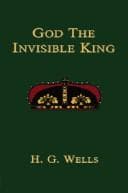
God, the Invisible KingWells, H. G. (Herbert George)
Religion
God, the Invisible King
Wells, H. G. (Herbert George)
God (Christianity)
The trouble becomes more marked and more difficult in the case of a man
who is a manufacturer or a trader, the financier of business enterprise
or the proprietor of great estates. The world is in need of manufactures
and that goods should be distributed; land must be administered and
new economic possibilities developed. The drift of things is in the
direction of state ownership and control, but in a great number of
cases the state is not ripe for such undertakings, it commands neither
sufficient integrity nor sufficient ability, and the proprietor of
factory, store, credit or land, must continue in possession, holding as
a trustee for God and, so far as lies in his power, preparing for his
supersession by some more public administration. Modern religion admits
of no facile flights from responsibility. It permits no headlong resort
to the wilderness and sterile virtue. It counts the recluse who fasts
among scorpions in a cave as no better than a deserter in hiding. It
unhesitatingly forbids any rich young man to sell all that he has and
give to the poor. Himself and all that he has must be alike dedicated to
God.
The plain duty that will be understood by the proprietor of land and of
every sort of general need and service, so soon as he becomes aware of
God, is so to administer his possessions as to achieve the maximum of
possible efficiency, the most generous output, and the least private
profit. He may set aside a salary for his maintenance; the rest he must
deal with like a zealous public official. And if he perceives that the
affair could be better administered by other hands than his own, then it
is his business to get it into those hands with the smallest delay and
the least profit to himself. . . .
The rights and wrongs of human equity are very different from right and
wrong in the sight of God. In the sight of God no landlord has a
RIGHT to his rent, no usurer has a RIGHT to his interest. A man is not
justified in drawing the profits from an advantageous agreement nor free
to spend the profits of a speculation as he will. God takes no heed of
savings nor of abstinence. He recognises no right to the “rewards of
abstinence,” no right to any rewards. Those profits and comforts and
consolations are the inducements that dangle before the eyes of the
spiritually blind. Wealth is an embarrassment to the religious, for God
calls them to account for it. The servant of God has no business with
wealth or power except to use them immediately in the service of God.
Finding these things in his hands he is bound to administer them in the
service of God.
Public-domain text, read in full here on John Shaqi.
Reviews
Reviews
No reviews yet
Be the first to share your thoughts on this work.
Join the Discussion
Join the discussion
Sign in to leave a comment or review.
Sign InorCreate an account