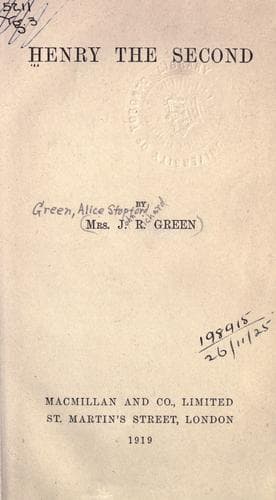
Great Britain -- History -- Henry II, 1154-1189; Henry II, King of England, 1133-1189
Henry had, however, peculiar advantages in the contest. He was master of
a disciplined body of ministers and servants, in whom he could confidently
trust. He was sure, in this matter at least, of the support of the lay
baronage, who had long arrears of jealousy to make up against their
hereditary opponents the clergy, and who were not likely now to forget
that no party in the Church had ever made common cause with the feudal
lords. He could count on the obedience of the secular clergy. In France
or Germany the bishops were members of the great houses, and as powerful
local rulers wielded a vast feudal authority. In England their position
was very different. They were drawn from the staff of the king's chapel,
and had their whole training in the administration of the court; and they
formed an official nobility who were charged, in common with the secular
nobility, with the conduct of the general business of the realm. They were
appointed to their places by the king for services done to him, and as
instruments of his policy. Neither Pope nor people had any share in their
election. Their estates were granted them by the same titles, and with the
same obligations as those of feudal barons; the king could withhold their
temporalities, sequestrate their lands, confiscate their personal goods,
and burden them with heavy fines; they lay absolutely at his mercy without
appeal. Every tie of feudal duty, of official training, of prudent
self-interest, forced them into subjection to the Crown. Their Roman
sympathies were quenched as they watched the growing independence of the
monasteries, and saw Church endowments taken to enrich the new religious
houses of every kind which were springing up all over England. They feared
the new authority claimed by legates, which threatened to withdraw the
clergy, if they chose to assert their claims, from regular episcopal
jurisdiction. They were thrown on the side of the king in ecclesiastical
questions, drawn together by a common cause, both alike found their
interest in the defence of national tradition as opposed to foreign
custom.
Public-domain text, read in full here on John Shaqi.
Reviews
Reviews
No reviews yet
Be the first to share your thoughts on this work.
Elsewhere in the archive
Join the Discussion
Join the discussion
Sign in to leave a comment or review.
Sign InorCreate an account