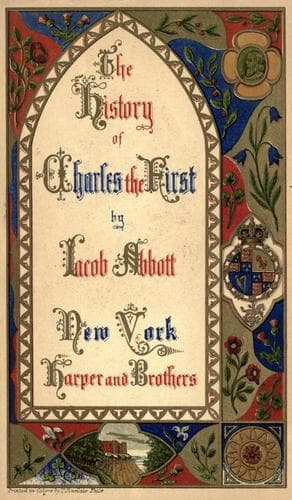
History of King Charles the First of EnglandAbbott, Jacob
History
History of King Charles the First of England
Abbott, Jacob
Charles I, King of England, 1600-1649; Great Britain -- History -- Charles I, 1625-1649; Great Britain -- Kings and rulers -- Biography
Buckingham might have known that such a spirit as this in Englishmen
was not to be trifled with. But he knew nothing, and thought of
nothing, except that he wanted to please and gratify the French
government. When the fleet, therefore, arrived in England, he
peremptorily ordered it back, and he resorted to all sorts of pretexts
and misrepresentations of the facts to persuade the officers and
men that they were not to be employed against the Protestants. The
fleet accordingly went back, and when they arrived, they found that
Buckingham had deceived them. They were ordered to Rochelle. One of the
ships broke away and returned to England. The officers and men deserted
from the other ships and got home. The whole armament was disorganized,
and the English people, who took sides with the sailors, were
extremely exasperated against Buckingham for his blind and blundering
recklessness, and against the king for giving such a man the power to
do his mischief on such an extensive scale.
[Sidenote: Expedition to Spain.]
[Sidenote: Buckingham's egregious folly.]
[Sidenote: The expedition ends in disaster.]
At another time the duke and the king contrived to fit out a fleet
of eighty sail to make a descent upon the coast of Spain. It caused
them great trouble to get the funds for this expedition, as they had
to collect them, in a great measure, by various methods depending on
the king's prerogative, and not by authority of Parliament. Thus the
whole country were dissatisfied and discontented in respect to the
fleet before it was ready to sail. Then, as if this was not enough,
Buckingham overlooked all the officers in the navy in selecting a
commander, and put an officer of the army in charge of it; a man whose
whole experience had been acquired in wars on the land. The country
thought that Buckingham ought to have taken the command himself, as
lord high admiral; and if not, that he ought to have selected his
commander from the ranks of the service employed. Thus the fleet set
off on the expedition, all on board burning with indignation against
the arbitrary and absurd management of the favorite. The result of
the expedition was also extremely disastrous. They had an excellent
opportunity to attack a number of ships, which would have made a very
rich prize; but the soldier-commander either did not know, or did not
dare to do, his duty. He finally, however, effected a landing, and
took a castle, but the sailors found a great store of wine there, and
went to drinking and carousing, breaking through all discipline. The
commander had to get them on board again immediately, and come away.
Then he conceived the plan of going to intercept what were called the
Spanish galleons, which were ships employed to bring home silver from
the mines in America, which the Spaniards then possessed. On further
thoughts he concluded to give up this idea, on account of the plague,
which, as he said, broke out in his ships. So he came back to England
Public-domain text, read in full here on John Shaqi.
Reviews
Reviews
No reviews yet
Be the first to share your thoughts on this work.
Join the Discussion
Join the discussion
Sign in to leave a comment or review.
Sign InorCreate an account