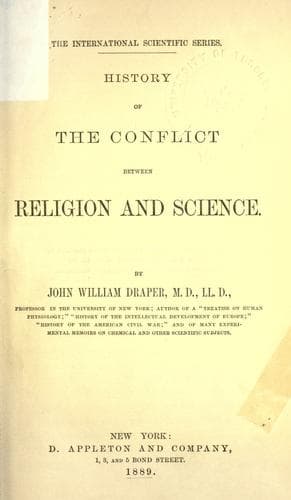
History of the Conflict Between Religion and ScienceDraper, John William
Religion
History of the Conflict Between Religion and Science
Draper, John William
Religion and science -- History
Then came the mystery of transubstantiation, or the conversion of bread
and wine by the priest into the flesh and blood of Christ. As centuries
passed, the paganization became more and more complete. Festivals sacred
to the memory of the lance with which the Savior's side was pierced,
the nails that fastened him to the cross, and the crown of thorns, were
instituted. Though there were several abbeys that possessed this last
peerless relic, no one dared to say that it was impossible they could
all be authentic.
We may read with advantage the remarks made by Bishop Newton on this
paganization of Christianity. He asks: "Is not the worship of saints and
angels now in all respects the same that the worship of demons was in
former times? The name only is different, the thing is identically
the same,... the deified men of the Christians are substituted for the
deified men of the heathens. The promoters of this worship were sensible
that it was the same, and that the one succeeded to the other; and,
as the worship is the same, so likewise it is performed with the same
ceremonies. The burning of incense or perfumes on several altars at one
and the same time; the sprinkling of holy water, or a mixture of salt
and common water, at going into and coming out of places of public
worship; the lighting up of a great number of lamps and wax-candles in
broad daylight before altars and statues of these deities; the hanging
up of votive offerings and rich presents as attestations of so many
miraculous cures and deliverances from diseases and dangers; the
canonization or deification of deceased worthies; the assigning of
distinct provinces or prefectures to departed heroes and saints; the
worshiping and adoring of the dead in their sepulchres, shrines, and
relics; the consecrating and bowing down to images; the attributing
of miraculous powers and virtues to idols; the setting up of little
oratories, altars, and statues in the streets and highways, and on
the tops of mountains; the carrying of images and relics in pompous
procession, with numerous lights and with music and singing;
flagellations at solemn seasons under the notion of penance; a great
variety of religious orders and fraternities of priests; the shaving of
priests, or the tonsure as it is called, on the crown of their heads;
the imposing of celibacy and vows of chastity on the religious of both
sexes--all these and many more rites and ceremonies are equally parts of
pagan and popish superstition. Nay, the very same temples, the very same
images, which were once consecrated to Jupiter and the other demons, are
now consecrated to the Virgin Mary and the other saints. The very same
rites and inscriptions are ascribed to both, the very same prodigies and
miracles are related of these as of those. In short, almost the whole
of paganism is converted and applied to popery; the one is manifestly
formed upon the same plan and principles as the other; so that there is
Public-domain text, read in full here on John Shaqi.
Reviews
Reviews
No reviews yet
Be the first to share your thoughts on this work.
Join the Discussion
Join the discussion
Sign in to leave a comment or review.
Sign InorCreate an account