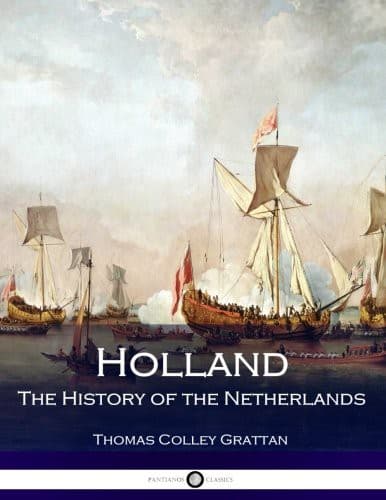
Holland: The History of the NetherlandsGrattan, Thomas Colley
History
Holland: The History of the Netherlands
Grattan, Thomas Colley
Netherlands -- History
The eleventh century had been for the Netherlands (with the exception
of Friesland and Flanders) an epoch of organization; and had nearly
fixed the political existence of the provinces, which were so long
confounded in the vast possessions of the empire. It is therefore
important to ascertain under what influence and on what basis
these provinces became consolidated at that period. Holland and
Zealand, animated by the spirit which we may fairly distinguish
under the mingled title of Saxon and maritime, countries scarcely
accessible, and with a vigorous population, possessed, in the
descendants of Thierry I., a race of national chieftains who
did not attempt despotic rule over so unconquerable a people. In
Brabant, the maritime towns of Berg-op-Zoom and Antwerp formed, in
the Flemish style, so many republics, small but not insignificant;
while the southern parts of the province were under the sway of
a nobility who crushed, trampled on, or sold their vassals at
their pleasure or caprice. The bishopric of Liege offered also
the same contrast; the domains of the nobility being governed
with the utmost harshness, while those prince-prelates lavished on
their plebeian vassals privileges which might have been supposed
the fruits of generosity, were it not clear that the object was
to create an opposition in the lower orders against the turbulent
aristocracy, whom they found it impossible to manage single-handed.
The wars of these bishops against the petty nobles, who made their
castles so many receptacles of robbers and plunder, were thus the
foundation of public liberty. And it appears tolerably certain
that the Paladins of Ariosto were in reality nothing more than
those brigand chieftains of the Ardennes, whose ruined residences
preserve to this day the names which the poet borrowed from the
old romance writers. But in all the rest of the Netherlands,
excepting the provinces already mentioned, no form of government
existed, but that fierce feudality which reduced the people into
serfs, and turned the social state of man into a cheerless waste
of bondage.
Public-domain text, read in full here on John Shaqi.
Reviews
Reviews
No reviews yet
Be the first to share your thoughts on this work.
Join the Discussion
Join the discussion
Sign in to leave a comment or review.
Sign InorCreate an account