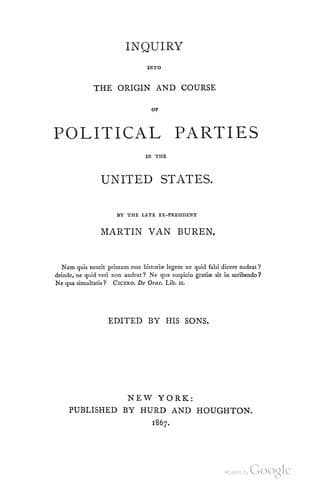
Inquiry Into the Origin and Course of Political Parties in the United StatesVan Buren, Martin
History
Inquiry Into the Origin and Course of Political Parties in the United States
Van Buren, Martin
Political parties -- United States
Having already, in a spirit of devotion to duty and a hazardous
disregard of responsibility which was made necessary by the occasion,
set aside the instructions of Congress by making a new Constitution, the
Convention pursued a similar course to the end. Instead of reporting the
result of their labors to Congress for its approval and submission to
the States for their unanimous sanction, according to the Articles of
Confederation, as was proposed at Annapolis and provided by Congress in
the act of sanction to the holding of the Convention, that body sent the
instrument it had framed to Congress, not for its approval, but to be by
it submitted to the States and people in the first instance, under a
provision, prescribed by the Convention, that if it was ratified by nine
of the thirteen States it should be binding upon all,--an heroic though
perhaps a lawless act.
The dangerous condition of the country, and the general opinion that
some decided step was necessary to its safety, added to the imposing
character of the instrument itself, which, though not satisfactory to
Congress, was yet far less objectionable than had been anticipated, and
a general expectation that important amendments rendering it still more
acceptable to the people would follow its ratification, deterred the
national legislature from refusing to comply with the request of the
Convention, notwithstanding its flagrant disregard of congressional
authority. The same considerations should have induced the Anti-Federal
party to acquiesce in the ratification of the Constitution. They should
have looked upon the marked effect of that instrument upon Congress as a
prophetic warning of the danger to which they would expose themselves as
a party by opposing it. But they did not see their duty, or, perhaps,
their interests, in that light; honest in their intentions and obstinate
in their opinions, they opposed the ratification, were defeated, and, as
a party, finally overthrown.
Public-domain text, read in full here on John Shaqi.
Reviews
Reviews
No reviews yet
Be the first to share your thoughts on this work.
Join the Discussion
Join the discussion
Sign in to leave a comment or review.
Sign InorCreate an account