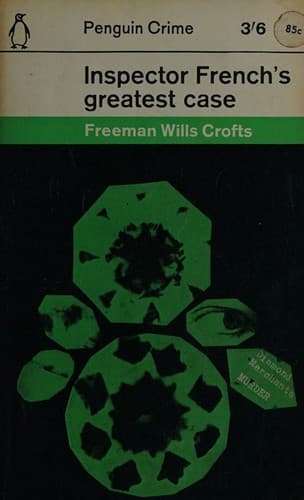
Detective and mystery stories; French, Joseph (Fictitious character) -- Fiction; Police -- Great Britain -- Fiction
For a moment the girl seemed too much surprised to reply, then she
answered with a show of indignation: “Really, Mr. French, this is too
much! May I ask if you suspect me of the crime?”
“Not of committing it,” French returned gravely, “but,” he leaned
forward and gazed keenly into her eyes, “I do suspect you of knowing
something about it. Could you not, Miss Duke, if you chose, put me on
the track of the criminal?”
“Oh, no, no, no!” the girl cried piteously, motioning with her hands as
if to banish so terrible a thought from her purview. “How can you
suggest such a thing? It is shameful and horrible!”
“Of course, Miss Duke, I can’t make you answer me if you don’t want to.
But I put it to you that it is worth your while thinking twice before
you attempt to keep back information. Remember that if I am not
satisfied, you may be asked these same questions in court, and then you
will have to answer them whether you like it or not. Now I ask you once
again, Why did you leave your taxi at Hatton Garden?”
“I think it is perfectly horrible of you to make all these insinuations
against me without any grounds whatever,” she answered a little
tremulously. “There is no secret about why I stopped the taxi, and I
have never made any mystery about it. Why it should have any importance
I can’t imagine.” She paused, then with a little gesture as if throwing
discretion to the winds, continued: “The fact is that as we were driving
home I suddenly saw a girl in the street whom I particularly wished to
meet. I stopped the cab and sent Mr. Harrington after her, but he missed
her.”
“Who was she?”
“I don’t know; that is why I was so anxious to see her. I suppose you
want the whole story?” She tossed her head and went on without waiting
for him to reply. “Last summer I was coming up to town from Tonbridge,
where I had been staying, and this girl and I had a carriage to
ourselves. We began to talk, and became quite friendly. When they came
to collect the tickets found I had lost mine. The man wanted to take my
name, but the girl insisted on lending me the money to pay my fare. I
wrote down her name and address on a scrap of paper so that I could
return the money to her, but when I reached home I found I had lost the
paper, and I stupidly had not committed the address to memory. I could
not send her the money, and I don’t know what she must have thought of
me. You can understand, therefore, my anxiety to meet her when I saw her
from the cab.”
“But why did you pay your fare a second time? You must have known that
all you had to do was to give your name and address to the ticket
collector.”
“I suppose I did,” she admitted, “but I preferred to pay rather than
have the trouble of explanations and probably letters to the head
office.”
Public-domain text, read in full here on John Shaqi.
Reviews
Reviews
No reviews yet
Be the first to share your thoughts on this work.
Elsewhere in the archive
Join the Discussion
Join the discussion
Sign in to leave a comment or review.
Sign InorCreate an account