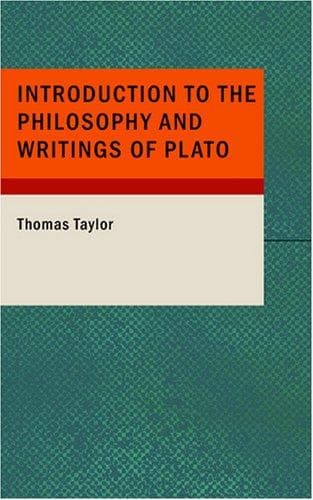
Introduction to the Philosophy and Writings of PlatoTaylor, Thomas
Philosophy
Introduction to the Philosophy and Writings of Plato
Taylor, Thomas
Philosophy; Plato
with opinion, is deprived of the incontrovertible reasonings of
demonstration.
The following is a specimen of the analytical method of Plato's dialectic.
Of analysis there are three species. For one is an ascent from sensibles
to the first intelligibles; a second is an ascent through things
demonstrated and subdemonstrated, to undemonstrated and immediate
propositions; and a third proceeds from hypothesis to unhypothetical
principles. Of the first of these species, Plato has given a most
admirable specimen in the speech of Diotima in the Banquet. For there he
ascends from the beauty about bodies to the beauty in souls; from this to
the beauty in right disciplines; from this again to the beauty in laws;
from the beauty in laws to the ample sea of beauty (Greek: to polu pelagos
tou kalou); and thus proceeding he at length arrives at the beautiful
itself.
The second species of analysis is as follows: It is necessary to make the
thing investigated the subject of hypothesis; to survey such things as
are prior to it; and to demonstrate these from things posterior,
ascending to such as are prior, till we arrive at the first thing and to
which we give our assent. But beginning from this, we descend
synthetically to the thing investigated. Of this species, the following
is an example from the Phaedrus of Plato. It is inquired if the soul is
immortal; and this being hypothetically admitted, it is inquired in the
next place if it is always moved. This being demonstrated, the next
inquiry is if that which is always moved, is self-moved; and this again
being demonstrated, it is considered whether that which is self-moved is
the principle of motion, and afterwards if the principle is unbegotten.
This then being admitted as a thing acknowledged, and likewise that what
is begotten is incorruptible, the demonstration of the thing proposed is
thus collected. If there is a principle, it is unbegotten and
incorruptible. That which is self-moved is the principle of motion. Soul
is self-moved. Soul therefore (i.e. the rational soul) is incorruptible,
unbegotten, and immortal.
Of the third species of analysis, which proceeds from the hypothetical to
that which is unhypothetical, Plato has given a most beautiful specimen
in the first hypothesis of his Parmenides. For here, taking for his
hypothesis that the one is, he proceeds through an orderly series of
negations, which are not privative of their subjects, but generative of
things which are as it were, their opposites, till he at length takes
away the hypothesis that the one is. For he denies of it all discourse
and every appellation. And thus evidently denies of it not only that it
is, but even negation. For all things are posterior to the one; viz.
things known, knowledge, and the instruments of knowledge. And thus,
beginning from the hypothetical, he ends in that which is unhypothetical,
and truly ineffable.
Public-domain text, read in full here on John Shaqi.
Reviews
Reviews
No reviews yet
Be the first to share your thoughts on this work.
Join the Discussion
Join the discussion
Sign in to leave a comment or review.
Sign InorCreate an account