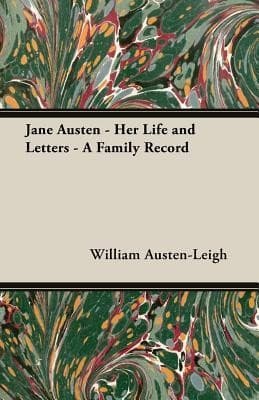
Jane Austen, Her Life and Letters: A Family RecordAusten-Leigh, William
General
Jane Austen, Her Life and Letters: A Family Record
Austen-Leigh, William
Austen, Jane, 1775-1817; Austen, Jane, 1775-1817 -- Family; Novelists, English -- 19th century -- Family relationships
The party which we have described was for many years 'unbroken[37] by
death and seldom visited by sorrow. Their situation had some peculiar
advantages beyond those of ordinary rectories. Steventon was a family
living. Mr. Knight, the patron, was also proprietor of nearly the whole
parish. He never resided there, and, consequently, the Rector and his
children came to be regarded in the neighbourhood as representatives of
the family. They shared with the principal tenant the command of an
excellent manor, and enjoyed, in this reflected way, some of the
consideration usually awarded to landed proprietors. They were not rich,
but, aided by Mr. Austen's power of teaching, they had enough to afford
a good education to their sons and daughters, to mix in the best society
of the neighbourhood, and to exercise a liberal hospitality to their own
relations and friends.' 'A carriage and pair of horses were kept'; but
this could be done more cheaply in the eighteenth century than in the
nineteenth. 'There were then no assessed taxes; the carriage, once
bought, entailed little further expense; and the horses, probably, like
Mr. Bennet's (in _Pride and Prejudice_), were often employed on farm
work. Moreover, it should be remembered that a pair of horses in those
days were almost a necessity, if ladies were to move about at all; for
neither the condition of the roads nor the style of carriage-building
admitted of any comfortable vehicle being drawn by a single horse';
indeed, the object of the builders seems to have been 'to combine the
greatest possible weight with the least possible amount of
accommodation.'[38]
Jane Austen lost no time in entering on the career of authorship. She
wrote because she must, and with very little prevision of the path which
her genius was afterwards to mark out for her. She was urged onward 'by
the first stirrings of talent within her and the absorbing interest of
early composition.
'It is impossible to say at how early an age she began. There are
copy-books extant containing tales, some of which must have been
composed while she was a young girl, as they had amounted to a
considerable number by the time she was sixteen. Her earliest stories
are of a slight and flimsy texture, and are generally intended to be
nonsensical, but the nonsense has much spirit in it. They are usually
preceded by a dedication of mock solemnity to some one of her family. It
would seem that the grandiloquent dedications prevalent in those days
had not escaped her youthful penetration. Perhaps the most
characteristic feature in those early productions is that, however
puerile the matter, they are always composed in pure simple English,
quite free from the over-ornamented style which might be expected from
so young a writer.'[39] The following is a specimen:--
THE MYSTERY.
AN UNFINISHED COMEDY.
* * * * *
DEDICATION.
TO THE REV. GEORGE AUSTEN.
Public-domain text, read in full here on John Shaqi.
Reviews
Reviews
No reviews yet
Be the first to share your thoughts on this work.
Join the Discussion
Join the discussion
Sign in to leave a comment or review.
Sign InorCreate an account