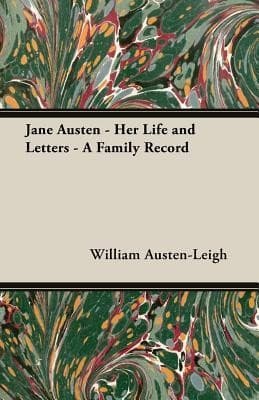
Jane Austen, Her Life and Letters: A Family RecordAusten-Leigh, William
General
Jane Austen, Her Life and Letters: A Family Record
Austen-Leigh, William
Austen, Jane, 1775-1817; Austen, Jane, 1775-1817 -- Family; Novelists, English -- 19th century -- Family relationships
Yesterday I began an acquaintance with my two
female cousins, Austens. My uncle, aunt,
Cassandra, and Jane arrived at Mr. F. Austen's
the day before. We dined with them there. As it's
pure nature to love ourselves, I may be allowed to
give the preference to the eldest, who is
generally reckoned a most striking resemblance of
me in features, complexion, and manners. I never
found myself so much disposed to be vain, as I
can't help thinking her very pretty, but fancied I
could discover _she_ was not so well pleased with
the comparison, which reflection abated a great
deal of the vanity so likely to arise and so
proper to be suppres't. The youngest [Jane] is
very like her brother Henry, not at all pretty and
very prim, unlike a girl of twelve; but it is
hasty judgment which you will scold me for. My
aunt has lost several fore-teeth, which makes her
look old; my uncle is quite white-haired, but
looks vastly well; all in high spirits and
disposed to be pleased with each other.
A day or two later, Philadelphia wrote further:--
I continue to admire my amiable likeness the best
of the two in every respect; she keeps up
conversation in a very sensible and pleasing
manner. Yesterday they all spent the day with us,
and the more I see of Cassandra the more I admire
[her]. Jane is whimsical and affected.
'Not at all pretty,' 'whimsical and affected.' 'Poor Jane!' one is
tempted to exclaim, but whatever she would have said to this estimate of
herself, of one thing we may be perfectly sure: that she would have been
the first to agree with her critic as to her own absolute inferiority to
Cassandra.
There is a passage in a letter written from Southampton, February
1807,[41] in which she says she is often 'all astonishment and shame'
when she thinks of her own manners as a young girl and contrasts them
with what she sees in the 'best children' of a later date.
One other mention of Jane at this period may be quoted--that of Sir
Egerton Brydges, the author and genealogist. His sister had married Mr.
Lefroy, who in 1783 had become rector of Ashe (the living which George
Austen would have held, had it become vacant before Deane), in
succession to Dr. Russell. Sir Egerton, on his marriage in 1788, had for
two years rented Mr. Austen's parsonage at Deane in order to be near his
sister.
Public-domain text, read in full here on John Shaqi.
Reviews
Reviews
No reviews yet
Be the first to share your thoughts on this work.
Elsewhere in the archive
Join the Discussion
Join the discussion
Sign in to leave a comment or review.
Sign InorCreate an account