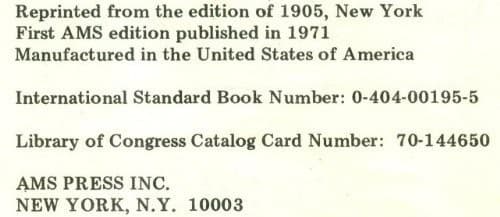
Ku Klux Klan: Its Origin, Growth and DisbandmentLester, John C.
History
Ku Klux Klan: Its Origin, Growth and Disbandment
Lester, John C.
Ku Klux Klan (19th century)
One or two illustrations may here be given of the methods resorted to
to play upon the superstitious fears of the negroes and others.[45] At
the parade in Pulaski, while the procession was passing a corner on
which a negro man was standing, a tall horseman in hideous garb turned
aside from the line, dismounted, and stretched out his bridle rein
toward the negro, as if he desired him to hold his horse. Not daring
to refuse, the frightened African extended his hand to grasp the rein.
As he did so, the Ku Klux took his own head from his shoulders and
offered to place that also in the outstretched hand. The negro stood
not upon the order of his going, but departed with a yell of terror.
To this day he will tell you: "He done it, suah, boss. I seed him do
it." The gown was fastened by a draw-string over the top of the
wearer's head. Over this was worn an artificial skull made of a large
gourd or of pasteboard. This with the hat could be readily removed,
and the man would then appear to be headless. Such tricks gave rise
to the belief--still prevalent among the negroes--that the Ku Klux
could take themselves all to pieces whenever they wanted to.
Some of the Ku Klux carried skeleton hands. These were made of bone or
wood with a handle long enough to be held in the hand, which was
concealed by the gown sleeve. The possessor of one of these was
invariably of a friendly turn and offered to shake hands with all he
met, with what effect may be readily imagined.
A trick of frequent perpetration in the country was for a horseman,
spectral and ghostly looking, to stop before the cabin of some negro
needing a wholesome impression and call for a bucket of water. If a
dipper or gourd was brought it was declined, and the bucket full of
water demanded. As if consumed by raging thirst the horseman grasped
it and pressed it to his lips. He held it there till every drop of the
water was poured into a gum or oiled sack concealed beneath the Ku
Klux robe. Then the empty bucket was returned to the amazed negro with
the remark: "That's good. It is the first drink of water I have had
since I was killed at Shiloh." Then a few words of counsel as to
future behavior made an impression not easily forgotten or likely to
be disregarded.
Under ordinary circumstances such devices are unjustifiable. But in
the peculiar state of things then existing they served a good purpose.
It was not only better to deter the negroes from theft and other
lawlessness in this way than to put them in the penitentiary; but it
was the only way, at this time, by which they could be controlled. The
jails would not contain them. The courts could not or would not try
them. The policy of the Klan all the while was to deter men from
wrongdoing. It was only in rare, exceptional cases, and these the most
aggravated, that it undertook to punish.[46]
FOOTNOTES:
Public-domain text, read in full here on John Shaqi.
Reviews
Reviews
No reviews yet
Be the first to share your thoughts on this work.
Elsewhere in the archive
Join the Discussion
Join the discussion
Sign in to leave a comment or review.
Sign InorCreate an account