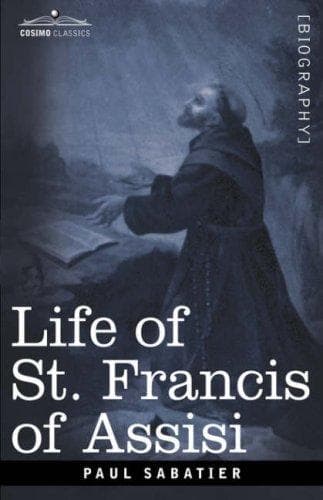
Christian saints -- Biography; Francis, of Assisi, Saint, 1182-1226
In a somewhat similar condition was a great part of Christendom under
Innocent III.; but while the sects of which I have just spoken move in a
very narrow circle of dogmas and ideas, in the thirteenth century every
sort of excess followed in rapid succession. Without the slightest
pause of transition men passed through the most contradictory systems of
belief. Still, a few general characteristics may be observed; in the
first place, heresies are no longer metaphysical subtleties as in
earlier days; Arius and Priscillian, Nestorius and Eutychus are dead
indeed. In the second place, they no longer arise in the upper and
governing class, but proceed especially from the inferior clergy and the
common people. The blows which actually threatened the Church of the
Middle Ages were struck by obscure laboring men, by the poor and the
oppressed, who in their wretchedness and degradation felt that she had
failed in her mission.
No sooner was a voice uplifted, preaching austerity and simplicity, than
it drew together not the laity only, but members of the clergy as well.
Toward the close of the twelfth century we find a certain Pons rousing
all Perigord, preaching evangelical poverty before the coming of St.
Francis.[14]
Two great currents are apparent: on one side the Cathari, on the other,
innumerable sects revolting from the Church by very fidelity to
Christianity and the desire to return to the primitive Church.
Among the sects of the second category the close of the twelfth century
saw in Italy the rise of the _Poor Men_, who without doubt were a part
of the movement of Arnold of Brescia; they denied the efficacy of
sacraments administered by unworthy hands.[15]
Public-domain text, read in full here on John Shaqi.
Reviews
Reviews
No reviews yet
Be the first to share your thoughts on this work.
Join the Discussion
Join the discussion
Sign in to leave a comment or review.
Sign InorCreate an account