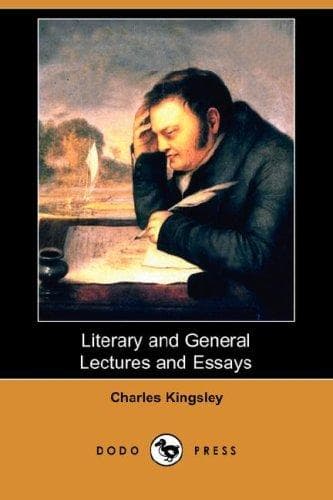
Literary and General Lectures and EssaysKingsley, Charles
History
Literary and General Lectures and Essays
Kingsley, Charles
English literature -- History and criticism
How Mr. Tennyson can have attained the prodigal fulness of thought
and imagery which distinguishes this poem, and especially the last
canto, without his style ever becoming overloaded, seldom even
confused, is perhaps one of the greatest marvels of the whole
production. The songs themselves, which have been inserted between
the cantos in the last edition of the book, seem, perfect as they
are, wasted and smothered among the surrounding fertility; till we
discover that they stand there, not merely for the sake of their
intrinsic beauty, but serve to call back the reader's mind, at every
pause in the tale of the Princess's folly, to that very healthy ideal
of womanhood which she has spurned.
At the end of the first canto, fresh from the description of the
female college, with its professoresses, and hostleresses, and other
utopian monsters, we turn the page, and--
As through the land at eve we went,
And pluck'd the ripen'd ears.
We fell out, my wife and I,
And kissed again with tears:
And blessings on the falling-out
That all the more endears,
When we fall out with those we love,
And kiss again with tears!
For when we came where lies the child
We lost in other years,
There above the little grave,
We kissed again with tears.
Between the next two cantos intervenes the well-known cradle-song,
perhaps the best of all; and at the next interval is the equally
well-known bugle-song, the idea of which is that of twin-labour and
twin-fame, in a pair of lovers:
Our echoes roll from soul to soul,
And grow for ever and for ever.
In the next, the memory of wife and child inspirits the soldier in
the field; in the next, the sight of the fallen hero's child opens
the sluices of his widow's tears; and in the last, and perhaps the
most beautiful of all, the poet has succeeded, in the new edition, in
superadding a new form of emotion to a canto in which he seemed to
have exhausted every resource of pathos which his subject allowed;
and prepares us for the triumph of that art by which he makes us,
after all, love the heroine whom he at first taught us to hate and
despise, till we see that the naughtiness is after all one that must
be kissed and not whipped out of her, and look on smiling while she
repents, with Prince Harry of old, "not in sackcloth and ashes, but
in new silk and old sack:"
Ask me no more: the moon may draw the sea;
The cloud may stoop from Heaven and take the shape,
With fold to fold, of mountain or of cape;
But, O too fond, when have I answered thee?
Ask me no more.
Ask me no more: what answer should I give?
I love not hollow cheek or faded eye:
Yet, O my friend, I will not have thee die!
Ask me no more, lest I should bid thee live;
Ask me no more.
Ask me no more: thy fate and mine are seal'd:
I strove against the stream and all in vain:
Let the great river take me to the main:
No more, dear love, for at a touch I yield;
Ask me no more.
Public-domain text, read in full here on John Shaqi.
Literary and General Lectures and Essays — John Shaqi
Reviews
Reviews
No reviews yet
Be the first to share your thoughts on this work.
Join the Discussion
Join the discussion
Sign in to leave a comment or review.
Sign InorCreate an account