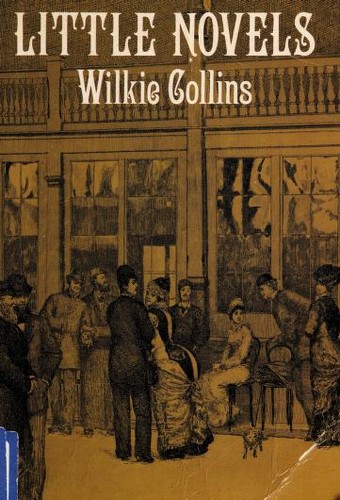
England -- Social life and customs -- 19th century -- Fiction
Our family property--excepting the sum of five thousand pounds left to
me by my mother--is landed property strictly entailed. The estates were
inherited by my only brother, Lord Medhurst; the kindest, the best, and,
I grieve to say it, the unhappiest of men. He lived separated from a
bad wife; he had no children to console him; and he only enjoyed at rare
intervals the blessing of good health. Having myself nothing to live on
but the interest of my mother's little fortune, I had to make my own way
in the world. Poor younger sons, not possessed of the commanding ability
which achieves distinction, find the roads that lead to prosperity
closed to them, with one exception. They can always apply themselves to
the social arts which make a man agreeable in society. I had naturally
a good voice, and I cultivated it. I was ready to sing, without being
subject to the wretched vanity which makes objections and excuses--I
pleased the ladies--the ladies spoke favorably of me to their
husbands--and some of their husbands were persons of rank and influence.
After no very long lapse of time, the result of this combination of
circumstances declared itself. Monsieur Bonnefoy's lessons became the
indirect means of starting me on a diplomatic career--and the diplomatic
career made poor Ernest Medhurst, to his own unutterable astonishment,
the hero of a love story!
The story being true, I must beg to be excused, if I abstain from
mentioning names, places, and dates, when I enter on German ground. Let
it be enough to say that I am writing of a bygone year in the present
century, when no such thing as a German Empire existed, and when the
revolutionary spirit of France was still an object of well-founded
suspicion to tyrants by right divine on the continent of Europe.
II.
ON joining the legation, I was not particularly attracted by my chief,
the Minister. His manners were oppressively polite; and his sense of his
own importance was not sufficiently influenced by diplomatic reserve. I
venture to describe him (mentally speaking) as an empty man, carefully
trained to look full on public occasions.
My colleague, the first secretary, was a far more interesting person.
Bright, unaffected, and agreeable, he at once interested me when we were
introduced to each other. I pay myself a compliment, as I consider, when
I add that he became my firm and true friend.
We took a walk together in the palace gardens on the evening of my
arrival. Reaching a remote part of the grounds, we were passed by a
lean, sallow, sour-looking old man, drawn by a servant in a chair on
wheels. My companion stopped, whispered to me, "Here is the Prince,"
and bowed bareheaded. I followed his example as a matter of course. The
Prince feebly returned our salutation. "Is he ill?" I asked, when we had
put our hats on again.
Public-domain text, read in full here on John Shaqi.
Reviews
Reviews
No reviews yet
Be the first to share your thoughts on this work.
Elsewhere in the archive
Join the Discussion
Join the discussion
Sign in to leave a comment or review.
Sign InorCreate an account