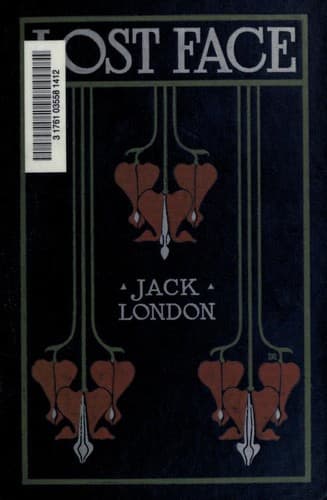
Adventure stories, American; American fiction -- 20th century; Short stories; Western stories
Porportuk continued grudgingly to advance money, and ever the money
flowed in golden foam away. Upon one thing El-Soo was resolved—her
father should die as he had lived. There should be for him no passing
from high to low, no diminution of the revels, no lessening of the lavish
hospitality. When there was famine, as of old, the Indians came groaning
to the large house and went away content. When there was famine and no
money, money was borrowed from Porportuk, and the Indians still went away
content. El-Soo might well have repeated, after the aristocrats of
another time and place, that after her came the deluge. In her case the
deluge was old Porportuk. With every advance of money, he looked upon
her with a more possessive eye, and felt bourgeoning within him ancient
fires.
But El-Soo had no eyes for him. Nor had she eyes for the white men who
wanted to marry her at the Mission with ring and priest and book. For at
Tana-naw Station was a young man, Akoon, of her own blood, and tribe, and
village. He was strong and beautiful to her eyes, a great hunter, and,
in that he had wandered far and much, very poor; he had been to all the
unknown wastes and places; he had journeyed to Sitka and to the United
States; he had crossed the continent to Hudson Bay and back again, and as
seal-hunter on a ship he had sailed to Siberia and for Japan.
When he returned from the gold-strike in Klondike he came, as was his
wont, to the large house to make report to old Klakee-Nah of all the
world that he had seen; and there he first saw El-Soo, three years back
from the Mission. Thereat, Akoon wandered no more. He refused a wage of
twenty dollars a day as pilot on the big steamboats. He hunted some and
fished some, but never far from Tana-naw Station, and he was at the large
house often and long. And El-Soo measured him against many men and found
him good. He sang songs to her, and was ardent and glowed until all
Tana-naw Station knew he loved her. And Porportuk but grinned and
advanced more money for the upkeep of the large house.
Then came the death table of Klakee-Nah.
He sat at feast, with death in his throat, that he could not drown with
wine. And laughter and joke and song went around, and Akoon told a story
that made the rafters echo. There were no tears or sighs at that table.
It was no more than fit that Klakee-Nah should die as he had lived, and
none knew this better than El-Soo, with her artist sympathy. The old
roystering crowd was there, and, as of old, three frost-bitten sailors
were there, fresh from the long traverse from the Arctic, survivors of a
ship’s company of seventy-four. At Klakee-Nah’s back were four old men,
all that were left him of the slaves of his youth. With rheumy eyes they
saw to his needs, with palsied hands filling his glass or striking him on
the back between the shoulders when death stirred and he coughed and
gasped.
Public-domain text, read in full here on John Shaqi.
Reviews
Reviews
No reviews yet
Be the first to share your thoughts on this work.
Elsewhere in the archive
Join the Discussion
Join the discussion
Sign in to leave a comment or review.
Sign InorCreate an account