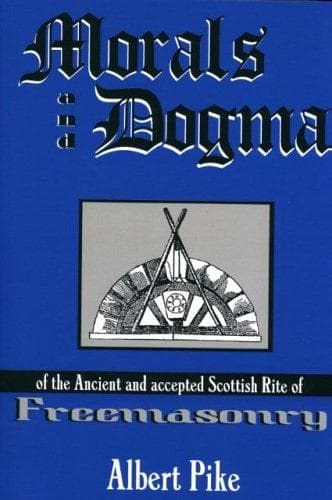
Morals and Dogma of the Ancient and Accepted Scottish Rite of FreemasonryPike, Albert
Religion
Morals and Dogma of the Ancient and Accepted Scottish Rite of Freemasonry
Pike, Albert
Freemasons
ruled and ruined by ignorant and shallow mediocrity, pert self-conceit,
the greenness of unripe intellect, vain of a school-boy's smattering of
knowledge.
The faithless and the false in public and in political life, will be
faithless and false in private. The jockey in politics, like the jockey
on the race-course, is rotten from skin to core. Everywhere he will see
first to his own interests, and whoso leans on him will be pierced with
a broken reed. His ambition is ignoble, like himself; and therefore he
will seek to attain office by ignoble means, as he will seek to attain
any other coveted object,--land, money, or reputation.
At length, office and honor are divorced. The place that the small and
shallow, the knave or the trickster, is deemed competent and fit to
fill, ceases to be worthy the ambition of the great and capable; or if
not, these shrink from a contest, the weapons to be used wherein are
unfit for a gentleman to handle. Then the habits of unprincipled
advocates in law courts are naturalized in Senates, and pettifoggers
wrangle there, when the fate of the nation and the lives of millions are
at stake. States are even begotten by villainy and brought forth by
fraud, and rascalities are justified by legislators claiming to be
honorable. Then contested elections are decided by perjured votes or
party considerations; and all the practices of the worst times of
corruption are revived and exaggerated in Republics.
It is strange that reverence for truth, that manliness and genuine
loyalty, and scorn of littleness and unfair advantage, and genuine faith
and godliness and large-heartedness should diminish, among statesmen and
people, as civilization advances, and freedom becomes more general, and
universal suffrage implies universal worth and fitness! In the age of
Elizabeth, without universal suffrage, or Societies for the Diffusion of
Useful Knowledge, or popular lecturers, or Lycæa, the statesman, the
merchant, the burgher, the sailor, were all alike heroic, fearing God
only, and man not at all. Let but a hundred or two years elapse, and in
a Monarchy or Republic of the same race, nothing is _less_ heroic than
the merchant, the shrewd speculator, the office-seeker, fearing man
only, and God not at all. Reverence for greatness dies out, and is
succeeded by base envy of greatness. Every man is in the way of many,
either in the path to popularity or wealth. There is a general feeling
of satisfaction when a great statesman is displaced, or a general, who
has been for his brief hour the popular idol, is unfortunate and sinks
from his high estate. It becomes a misfortune, if not a crime, to be
above the popular level.
Public-domain text, read in full here on John Shaqi.
Reviews
Reviews
No reviews yet
Be the first to share your thoughts on this work.
Elsewhere in the archive
Join the Discussion
Join the discussion
Sign in to leave a comment or review.
Sign InorCreate an account