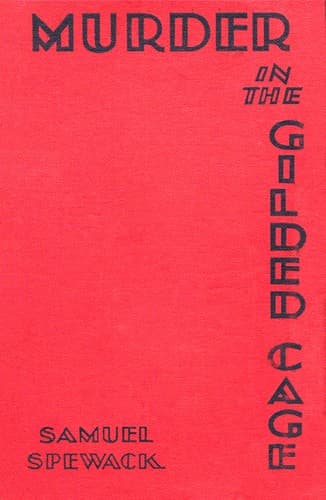
Americans -- Cuba -- Fiction; Detective and mystery stories; Havana (Cuba) -- Fiction; Murder -- Investigation -- Fiction
“Undoubtedly!” insisted the Russian. “I shall go one step further. Let
us consider the history of this case: After Mrs. Breese’s divorce, Mr.
Rice scorned her husband, whom he had known for many years, and sided
with the lady. Is that natural? No. Men do not break friendship under
such circumstances. And behold: When Mrs. Breese is dead, the two men
are friends openly once more. What does that suggest to you? Remember,
Breese was anxious for a reconciliation. To me it suggests that the two
men only pretended to quarrel during the divorce trial. Rice sided
with Mrs. Breese so as to be in a position to influence her. That’s why
he so violently opposed her marriage to the actor. Remember, he did not
intend marrying her himself. There was no question of love between this
man and the woman. What then was his motive in coming down here with
her and campaigning so strenuously against the actor? Obviously, he
wanted her to remarry his friend Breese.
“Now, mark this--Breese calls you to his hotel before the murder
and warns you against the actor. Rice comes to the house, after the
murder, and the first thing he does is to accuse the actor. He produces
telegrams from the detective agency (hired by Breese) and tells you
about the forged check. I hold no brief for the actor, but I don’t
think he forged that check. I think Breese did himself. But observe how
in every development of the case Breese and Rice work together, and yet
apart--what does that suggest?”
“Do you mean to say that Rice took part in the murder, or knew about it
beforehand?” Smith asked skeptically.
“No,” said the Russian. “I believe Breese unburdened himself to his
friend after the murder, threw himself upon Rice’s mercy, and Rice has
been doing everything he can to save his friend. And if in the process
the actor gets hurt why, I should think that Rice would be the type to
accept such a miscarriage of justice with the comforting reflection
that Mr. Thomas would get only what he deserved.”
“For that matter,” replied Smith, “I can build up the same case against
you!”
“Against me?” exclaimed the Russian.
“Certainly,” said Smith. “You are protecting your friend, the Count. He
was not only in the house at the time of the murder, but he actually
confessed to it, after consulting you. You have been hammering away on
old man Breese. Why? If I use the same logic you do, I could say--to
protect your friend.”
The Russian laughed. “You have me there, Mr. Smith,” he admitted
admiringly. “It had never occurred to me. But you’re not serious?”
“No,” said Smith. “I’m not serious about any theories. And this case
seems to me to consist of nothing else. I’m looking for something
definite, something tangible.”
The Russian picked up Smith’s summary and studied it once more.
Public-domain text, read in full here on John Shaqi.
Reviews
Reviews
No reviews yet
Be the first to share your thoughts on this work.
Join the Discussion
Join the discussion
Sign in to leave a comment or review.
Sign InorCreate an account