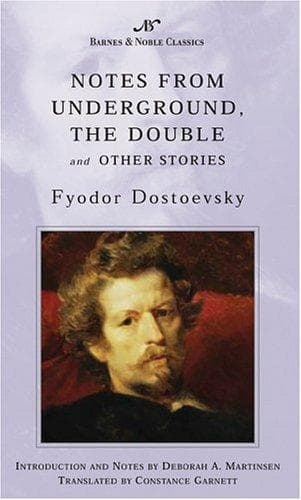
Political fiction; Russia -- History -- 1801-1917 -- Fiction; Russia -- Officials and employees -- Fiction
“Wait a minute,” she said suddenly, in the passage just at the doorway,
stopping me with her hand on my overcoat. She put down the candle in
hot haste and ran off; evidently she had thought of something or wanted
to show me something. As she ran away she flushed, her eyes shone, and
there was a smile on her lips—what was the meaning of it? Against my
will I waited: she came back a minute later with an expression that
seemed to ask forgiveness for something. In fact, it was not the same
face, not the same look as the evening before: sullen, mistrustful and
obstinate. Her eyes now were imploring, soft, and at the same time
trustful, caressing, timid. The expression with which children look at
people they are very fond of, of whom they are asking a favour. Her
eyes were a light hazel, they were lovely eyes, full of life, and
capable of expressing love as well as sullen hatred.
Making no explanation, as though I, as a sort of higher being, must
understand everything without explanations, she held out a piece of
paper to me. Her whole face was positively beaming at that instant with
naive, almost childish, triumph. I unfolded it. It was a letter to her
from a medical student or someone of that sort—a very high-flown and
flowery, but extremely respectful, love-letter. I don’t recall the
words now, but I remember well that through the high-flown phrases
there was apparent a genuine feeling, which cannot be feigned. When I
had finished reading it I met her glowing, questioning, and childishly
impatient eyes fixed upon me. She fastened her eyes upon my face and
waited impatiently for what I should say. In a few words, hurriedly,
but with a sort of joy and pride, she explained to me that she had been
to a dance somewhere in a private house, a family of “very nice people,
_who knew nothing_, absolutely nothing, for she had only come here so
lately and it had all happened ... and she hadn’t made up her mind to
stay and was certainly going away as soon as she had paid her debt...”
and at that party there had been the student who had danced with her
all the evening. He had talked to her, and it turned out that he had
known her in old days at Riga when he was a child, they had played
together, but a very long time ago—and he knew her parents, but _about
this_ he knew nothing, nothing whatever, and had no suspicion! And the
day after the dance (three days ago) he had sent her that letter
through the friend with whom she had gone to the party ... and ...
well, that was all.
She dropped her shining eyes with a sort of bashfulness as she
finished.
Public-domain text, read in full here on John Shaqi.
Reviews
Reviews
No reviews yet
Be the first to share your thoughts on this work.
Join the Discussion
Join the discussion
Sign in to leave a comment or review.
Sign InorCreate an account