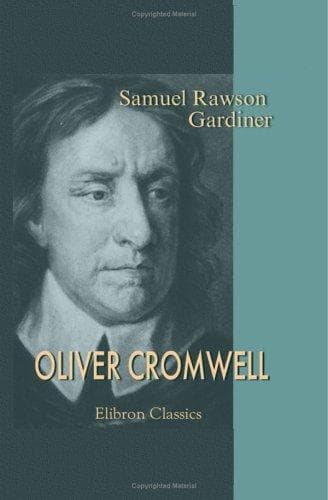
Cromwell, Oliver, 1599-1658; Great Britain -- History -- Commonwealth and Protectorate, 1649-1660
Almost, if not altogether, in despair, Cromwell sought a compromise
with the Presbyterians on the basis of the temporary establishment of
Presbyterianism as the national religion, with as large a toleration
as he could persuade them to grant. When the House of Commons refused
to extend toleration to the worship authorised by the Prayer Book, it
was obvious that the scheme was not one which had a chance of obtaining
the assent of Charles. Cromwell's hope of uniting Parliament and army
in bringing pressure upon the King was as completely frustrated as his
former hope of bringing about an understanding between the King and
the army. His impotence could not but give encouragement to the other
'faction of desperate fellows as hot as fire' to demand a settlement
on quite another basis from that on which Cromwell and the other army
leaders had vainly attempted to found a Government.
In all his efforts, Cromwell's aim had been to strengthen the chances
in favour of the new toleration by intertwining it with the old
constitutional pillars of King and Parliament. His schemes, based as
they were on a thoroughly political instinct which warned him against
the danger of cutting the State adrift from its moorings, had broken
down mainly in consequence of the resistance of the King. It was but
natural that earnest men should seek new modes of gaining their ends
when the old ones proved ineffective. As the years of revolution passed
swiftly on, new and more drastic schemes appeared upon the surface,
not, as is often said, because in some unexplained way revolutions tend
in themselves to strengthen the hands of extreme men, but because the
force of conservative resistance calls forth more violent remedies.
The misgovernment of Buckingham and Laud had fostered the Parliamentary
idea. The resistance of Parliament to toleration had led to the
conception by the army leaders of the idea of Parliamentary reform,
and now the failure of those leaders produced the plan of founding a
government not on institutions sanctified by old use and wont, but on a
totally new democratic system. Outside the army, the main supporter of
the new principles was John Lilburne, who had been a lieutenant-colonel
in Manchester's army before the formation of the New Model, a man
litigious and impracticable, but public-spirited and prepared to accept
the consequences of his actions on behalf of his fellow-citizens or
of himself. During the troubles he spent a great part of his life in
prison, and at the present time he had been more than a year in the
Tower. He had a large following in the army, and early in October five
regiments deposed their Agitators, and choosing new ones, set them to
draw up a political manifesto which, under the name of _The Case of the
Army Truly Stated_, was laid before Fairfax on the 18th.
Public-domain text, read in full here on John Shaqi.
Reviews
Reviews
No reviews yet
Be the first to share your thoughts on this work.
Join the Discussion
Join the discussion
Sign in to leave a comment or review.
Sign InorCreate an account